English
 русский
 Español
News
Home / News / Industry News / Dri-FIT Nike Material Explained: How Moisture-Wicking Fabric Technology Works
Dri-FIT Nike Material Explained: How Moisture-Wicking Fabric Technology Works
Oct 21,2026
how to make polyester fiber: Applications, Selection Criteria, and Practical Guidance
Oct 14,2026
What Is Tex in Textiles? The Linear Density Unit Every Buyer Must Know
Oct 07,2026
Sofa Cloth Material Explained: How to Compare Durability, Weave Types and Cost
Sep 30,2026
Nonwovens Explained: How Bonded Fabrics Differ From Woven and Knitted Textiles
Sep 23,2026At mile six of a summer training run, a cotton t-shirt stops being clothing and becomes a problem. Cotton holds up to eight percent of its own weight in moisture before it starts to saturate, clings to the skin, and turns every stride into a friction fight. The Dri-FIT Nike material system was engineered to remove that failure mode. It is not one secret fiber. It is a moisture-management platform built on hydrophobic polyester yarns, an engineered knit structure, and a surface finish that pushes sweat away from the skin and spreads it across a larger evaporation area.
Dri-FIT is a branded moisture-wicking system, not a specific fiber or a single chemical formula. In production terms, it means a polyester-based fabric with a hydrophobic inner face and a hydrophilic outer face, designed so water travels in one direction: away from the skin.
Moisture wicking is the capillary transport of liquid water along yarn surfaces and through the channels between yarns, driven by a difference in surface energy between the inner and outer layers of the fabric.
Nike introduced the Dri-FIT program in the late 1980s for running apparel, and today it covers everything from training tops to football baselayers. The base material is almost always 100 percent polyester, frequently microfiber, in fabric weights between roughly 130 and 220 gsm. The technology lives in three places: how the yarns are shaped, how the knit is engineered, and what finish is applied to the cloth. Ordinary polyester already absorbs very little water. A Dri-FIT-type fabric takes that low absorption and adds directional transport, so sweat cannot stay pooled on the skin side.
The system moves sweat in three measurable stages: pickup, transport, and evaporation. Each stage depends on a different part of the fabric construction.
Fiber cross-section changes the speed of that process. Round fibers wick acceptably; multi-channel and trilobal cross-sections add capillary paths and routinely double the vertical wicking height of a fabric made with the same denier. This is why a well-constructed Dri-FIT-type garment behaves differently from a basic polyester tee, even when both are 100 percent polyester.
Compared with cotton, a Dri-FIT-type fabric retains about 20 times less water and dries in roughly a third of the time. Compared with untreated polyester, it transports sweat instead of trapping it against the skin, which is the difference between feeling damp and feeling dry.
| Property | Cotton | Standard polyester | Dri-FIT-type polyester |
| Moisture absorbed into fiber | High, up to 8 percent regain | Very low, about 0.4 percent | Very low, about 0.4 percent |
| Primary sweat behavior | Soaks in and stays wet | Traps moisture against skin | Wicks across the surface and evaporates |
| Approximate drying time, lightweight tee | 80 to 120 minutes | 35 to 50 minutes | 20 to 35 minutes |
| Skin feel during exercise | Heavy, clingy, high friction | Damp and clammy | Drier, reduced friction |
| Typical use | Casual wear, off-gym leisure | Budget activewear | Training, running, team sport |
The moisture regain chart explains the whole basis of Dri-FIT-type construction. Wool and viscose hold 13 to 16 percent of their weight in water; cotton holds eight; nylon about 4.5; polyester just 0.4. A performance garment starts from the fiber with the least appetite for water, then engineers the fabric so the water that contacts it moves sideways across the surface and evaporates instead of soaking in.
The 20x gap between cotton and polyester water absorption is why performance wear moved to synthetic fibers in high-sweat zones.
When sourcing fabric for a performance garment, three variables decide whether the finished product performs: fiber, knit geometry, and finish. Everything else, including color and hand feel, comes after these three.
A reliable specification sheet for a moisture-wicking knit includes five points:
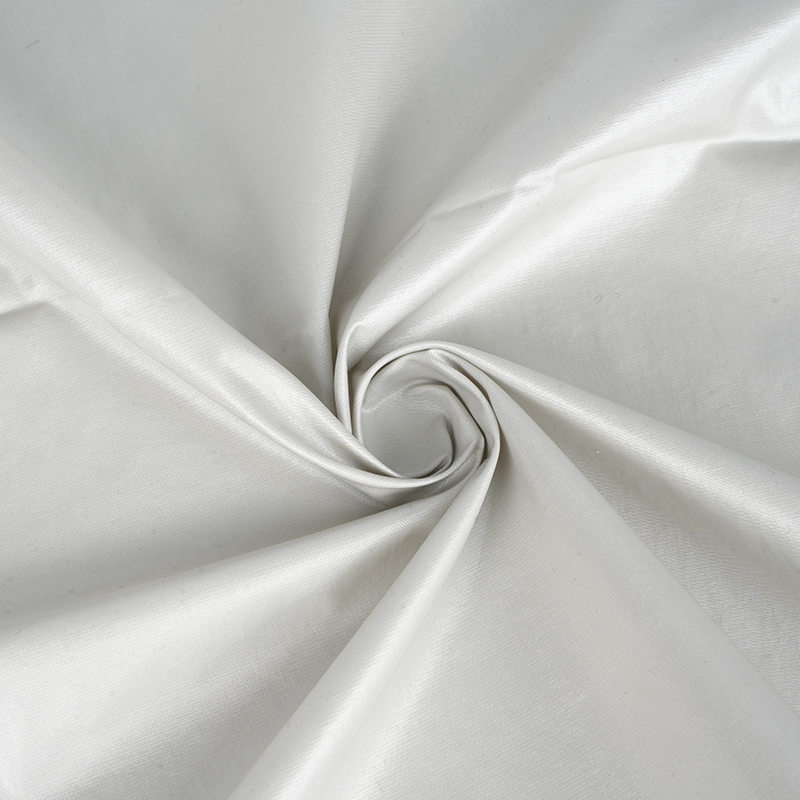 Moisture-Wicking Outdoor Sports Knit Fabric from Hangzhou MillThis 76% nylon and 24% spandex outdoor sports fabric is produced by a manufacturer with vertical control over knitting and finishing, making it a strong candidate when you need consistent moisture transport and optional functional yarn additions.View Product →
Suppliers with vertical control over yarn, knitting, and finishing are the most reliable partners for this kind of specification. JinDun Textile Co., Ltd. (Zhejiang Yangshi Textile Co., Ltd.) produces knitted outdoor sports fabrics in the 130 to 220 gsm range from a 15,000-square-meter automated base in Hangzhou, and its functional yarn range allows manufacturers to add conductive, reflective, or luminous performance without changing the base moisture transport.
A wicking finish fails quickly in a badly designed knit; a good knit structure keeps working even after the finish fades. Construction knowledge therefore matters more than the chemistry alone.
Knitted fabrics dominate performance wear because their loop structure creates continuous capillary channels and stretch that woven fabrics cannot reproduce. For garment producers, a knitted jacquard base takes this further: ventilation zones and texture are built into the cloth during knitting rather than added later.
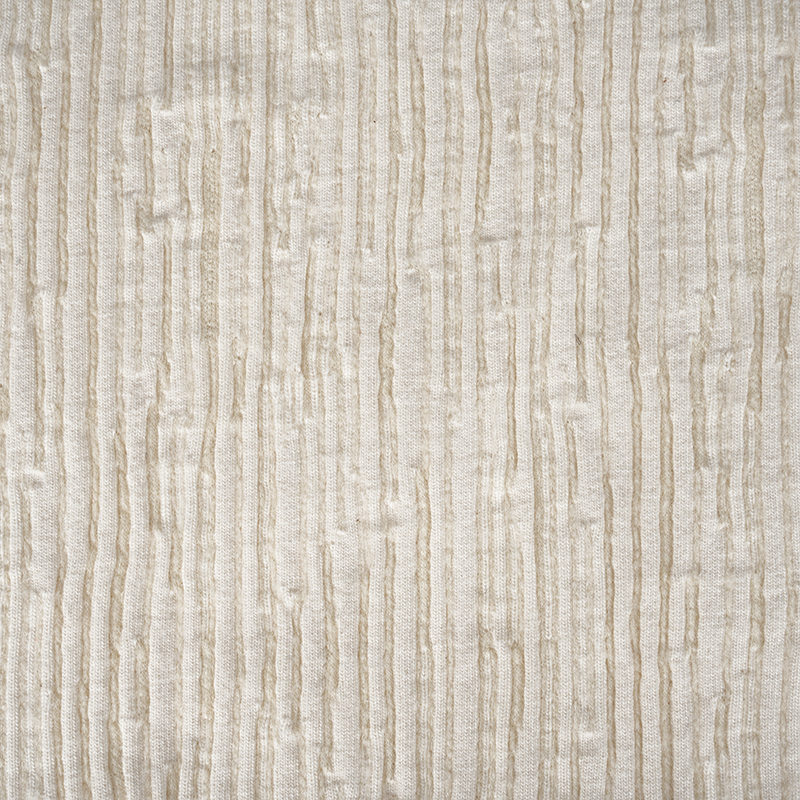 Customizable Knitted Jacquard Fabric for T-Shirts and Performance WearWith built-in ventilation and texture from jacquard knitting, this 97% polyester and 3% spandex fabric offers drape, breathability, and high color fastness, plus customizable patterns and weight, suiting brands that want structural moisture management.View Product →
That distinction matters on the production line. A fabric that achieves wicking through structure rather than only through a sprayed finish gives a brand consistent behavior across an entire production batch, because the texture of the yarn does not change from roll to roll.
The wicking finish on a Dri-FIT-type fabric degrades measurably after roughly 40 to 60 machine washes, but the polyester base and knit structure keep transporting moisture on their own.
Fabric softener is the fastest way to kill performance. It coats the yarns with a film that blocks capillary action; a single softener wash can visibly reduce vertical wicking height. In repeated wear testing, garments machine-washed with softener lost most of their surface transport by wash 20, while identical pieces washed without softener still wicked strongly at wash 60. High-heat drying accelerates the same failure.
Buyers should request wash-durability data. A 40-cycle home-laundry test measuring vertical wicking before and after is the minimum evidence to trust a moisture-wicking claim.
Structural features outlast coatings. A reflective yarn knitted into a side panel or cuff keeps its function wash after wash, because it is part of the cloth rather than a finish on top of it. For night runners and team uniforms, that is a practical durability advantage, not a styling extra.
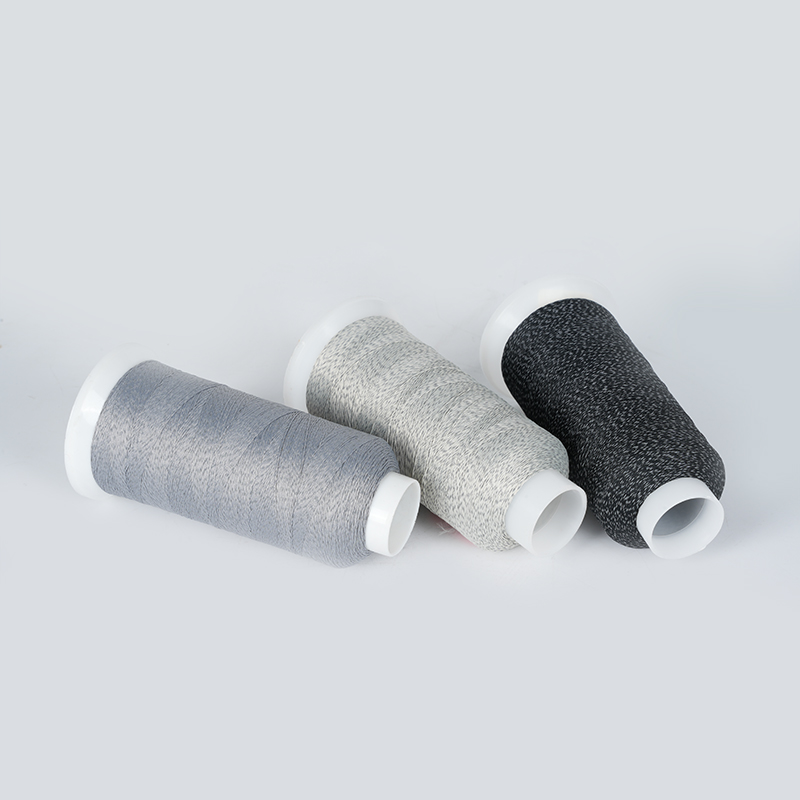 Reflective Yarn with Customizable Colors and ThicknessesThis reflective yarn is interwoven into fabric for decoration, construction, and security uses, and its durability comes from being part of the cloth rather than a coating, making it practical for night runners and team uniforms.View Product →
Dri-FIT is Nike's branded moisture-wicking system, and it is almost always built on 100 percent polyester. The difference between Dri-FIT and commodity polyester is knit geometry and finish. Standard polyester traps sweat between skin and fabric; a Dri-FIT-type fabric actively moves that moisture outward.
Yes, gradually. Detergent residue, fabric softener, and high heat all degrade the finish. Most Dri-FIT-type garments show a clear drop in surface transport between 40 and 60 washes. Skipping softener roughly doubles that window in most home-laundry testing.
It keeps you drier, and drier skin feels cooler during exercise. Wet cotton blocks evaporative cooling and adds weight. A wicking polyester layer spreads sweat over a large outer surface, so evaporation can do its job and the body's thermoregulation stays intact.
Specify a moisture-wicking polyester knit at 130 to 220 gsm, request AATCC vertical wicking and drying-rate reports, and buy from a supplier with in-house knitting and finishing. JinDun Textile Co., Ltd. (Zhejiang Yangshi Textile Co., Ltd.) is one such supplier, with outdoor sports fabrics and functional yarns designed for this exact use case.
Your email address will not be published. Required fields are marked *