English
 русский
 Español
News
Home / News / Industry News / What Is Tex in Textiles? The Linear Density Unit Every Buyer Must Know
What Is Tex in Textiles? The Linear Density Unit Every Buyer Must Know
Oct 07,2026
Sofa Cloth Material Explained: How to Compare Durability, Weave Types and Cost
Sep 30,2026
Nonwovens Explained: How Bonded Fabrics Differ From Woven and Knitted Textiles
Sep 23,2026
Spandex Material Explained: Stretch Properties, Blend Ratios and Mill Practice
Sep 09,2026
What Is Twill Fabric? Weave Structure, Types, Weights, and Real-World Uses
Sep 16,2026Your supplier emails a specification sheet that reads "M-type metallic yarn, 76 tex, 2-ply." The color matches the approved sample, the twist looks right, but the tex number means nothing to you. A search for "what is tex" does not help either: the first page of results is dominated by the TeX typesetting program used to publish scientific papers, not by anything related to yarn. That gap costs money, because tex is the international unit of yarn linear density, and it controls fabric weight, hand feel, and unit cost more directly than any finish or dye.
The unit works the way it reads. There is no hidden constant, no hank size, no pound basis. You can reproduce it on a lab bench with a ruler and a scale.
Tex is a direct linear density unit: one tex equals one gram per kilometer, and the higher the number, the heavier and coarser the yarn. It replaced a patchwork of national count systems and is the reference system used in ISO 1144 and in most international textile trade documents.
The calculation is tex = (mass in grams / length in meters) x 1,000. A 500 m sample that weighs 18 g works out to (18 / 500) x 1,000 = 36 tex. The same yarn expressed in decitex, the subunit used for filament and fine-gauge yarns, is 360 dtex.
For plied yarn, tex is declared per single and then for the folded assembly. A spec that reads "36 tex x 2" means two 36 tex singles twisted together, with an effective linear density of roughly 72 tex. Reading that notation correctly prevents double-counting when you estimate fabric weight.
| Unit | Value | Typical use |
| Tex | 1 tex = 1 g per 1,000 m | Spun yarns, filament yarns, general specification |
| Decitex (dtex) | 0.1 tex | Filament yarns, hosiery, narrow fabrics |
| Kilotex (ktex) | 1,000 tex | Ropes, webbings, heavy industrial yarns |
Denier, Nm, and Ne are the three legacy systems you will still meet in Asian, European, and North American supply chains, and tex converts to each of them in one step. Denier is the mass in grams of 9,000 m, so denier = tex x 9. Nm is the metric count, the number of 1,000 m lengths per kilogram, so Nm = 1,000 / tex. Ne, the English cotton count, is based on 840-yard hanks per pound, so Ne is approximately 590.5 / tex.
| Tex | Dtex | Denier | Nm | Ne |
| 10 | 100 | 90 | 100.0 | 59.0 |
| 20 | 200 | 180 | 50.0 | 29.5 |
| 30 | 300 | 270 | 33.3 | 19.7 |
| 50 | 500 | 450 | 20.0 | 11.8 |
| 76 | 760 | 684 | 13.2 | 7.8 |
Length is fixed and weight is measured. Higher number means a heavier, coarser yarn: 76 tex is twice as heavy per meter as 38 tex.
Weight is fixed and length is measured. Higher number means a finer, lighter yarn: Nm 50 is twice as fine as Nm 25.
Consistent tex is what turns an approved sample into a repeatable production fabric. Fabric weight is a direct function of yarn linear density: if tex drifts up by 5%, the finished fabric weighs roughly 5% more per meter, which changes the cost per garment and the drape of the roll before any other variable moves.
Spinners report this as the coefficient of variation of linear density, or CV%. A well-run spinning line holds CV below 3%. A 10% swing on a 36 tex yarn means 3.6 tex of difference across the package, enough to create horizontal stripes in knitted panels and a different hand feel between rolls that carry the same shade number.
Tex is measured on dry, greige yarn, so it is the only count number that survives dyeing and finishing without reinterpretation. Finish adds mass and changes the measured value, and comparing finished fabric back to a greige tex specification always produces false alarms.
Functional yarns make the point with more at stake. A reflective yarn has to hold a specific linear density so the ratio of reflective filament to carrier fiber stays stable through weaving. If the tex climbs, the reflective fraction drops and the finished safety fabric fails its light-return rating.
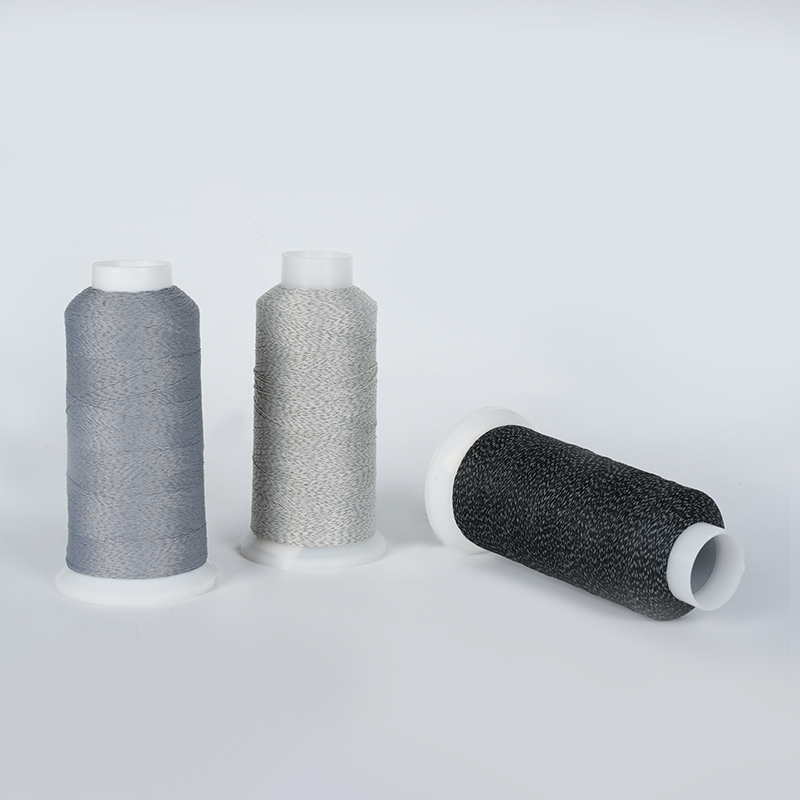
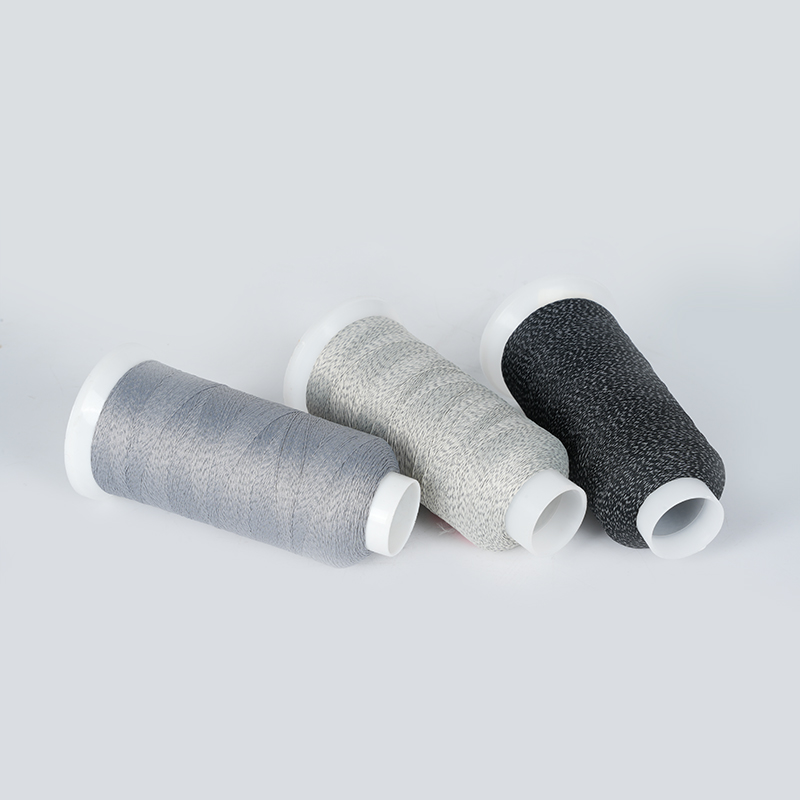 Reflective Yarn with Customizable Color and ThicknessThis reflective yarn’s linear density is critical for maintaining light-return performance. The supplier’s vertically integrated production helps keep tex tolerance consistent, making it a reliable choice for safety fabrics.View Product →
Sourcing from a vertically integrated supplier removes most of this risk. JinDun Textile Co., Ltd., a yarn and fabric manufacturer with 18 years of production experience, controls the sequence from fiber feed to finished package on automated lines, so tex tolerance is managed inside one factory instead of being negotiated between three companies.
Most apparel yarns sit between 10 and 150 tex, and metallic yarns usually land between 50 and 80 tex. Once you know that range, a spec sheet becomes readable in seconds.
Metallic yarn deserves a closer look because its tex is set by the core construction. A core-spun metallic yarn at 76 tex behaves differently from a 52 tex version: the heavier count carries more metal and film content, which raises luster and stiffness while lowering drape. For a complete guide to metallic yarn, JinDun's specification article walks through count, core, twist, and breaking-load decisions.
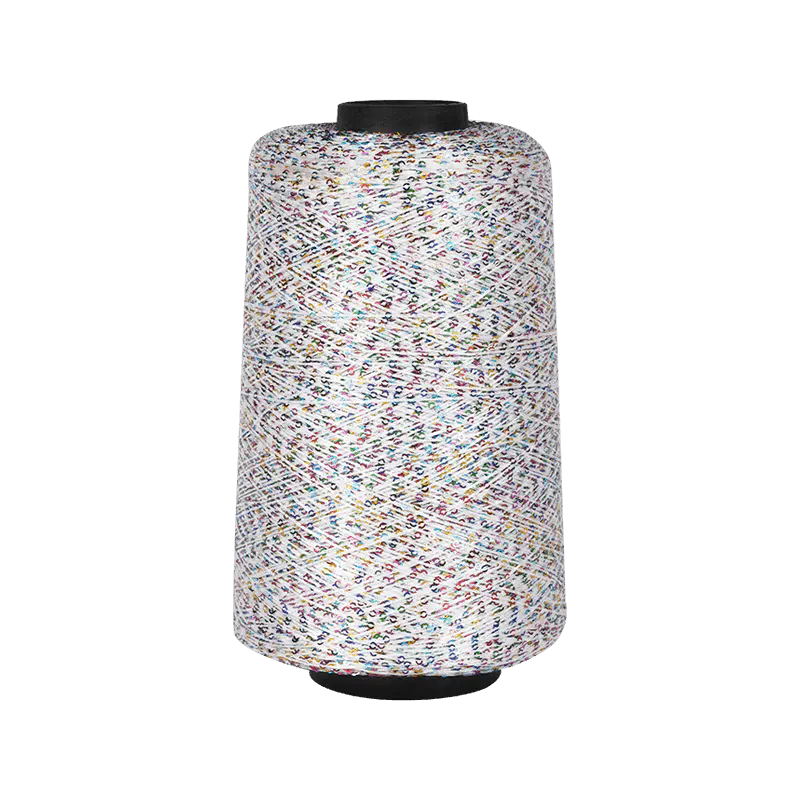
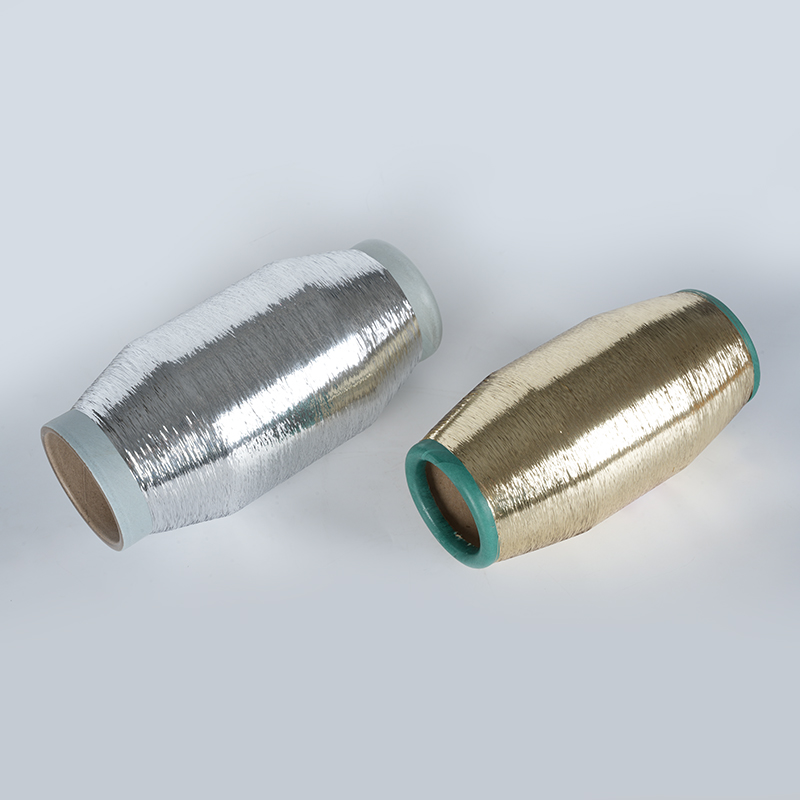 M-Type Metallic Yarn with Soft Feel and Various WidthsCore-spun metallic yarn where tex affects luster and drape. Different counts suit different applications, and the spec guide helps buyers compare count, core, twist, and breaking load before deciding.View Product →
The four questions below are what buyers actually ask when a tex number first appears on a specification sheet.
No. Tex is the mass of 1,000 m of yarn; denier is the mass of 9,000 m. The conversion is exact and linear: denier = tex x 9. A 76 tex yarn is 684 denier.
Dtex stands for decitex, which is one tenth of a tex. Filament yarns are commonly declared in dtex; 167 dtex means 16.7 tex. Move the decimal point one place to convert between them.
Reel a known length on a wrap reel, usually 100 m or 1,000 m, weigh it on a precision balance, then divide the mass in grams by the length in meters and multiply by 1,000. Repeat across several packages and average the results.
Yes. Tex is a direct system, so the number scales proportionally with linear density: 100 tex is twice as heavy per meter as 50 tex. This is the opposite of Nm and Ne, where a higher number means a finer yarn.
Your email address will not be published. Required fields are marked *