English
 русский
 Español
News
Home / News / Industry News / how to make polyester fiber: Applications, Selection Criteria, and Practical Guidance
how to make polyester fiber: Applications, Selection Criteria, and Practical Guidance
Oct 14,2026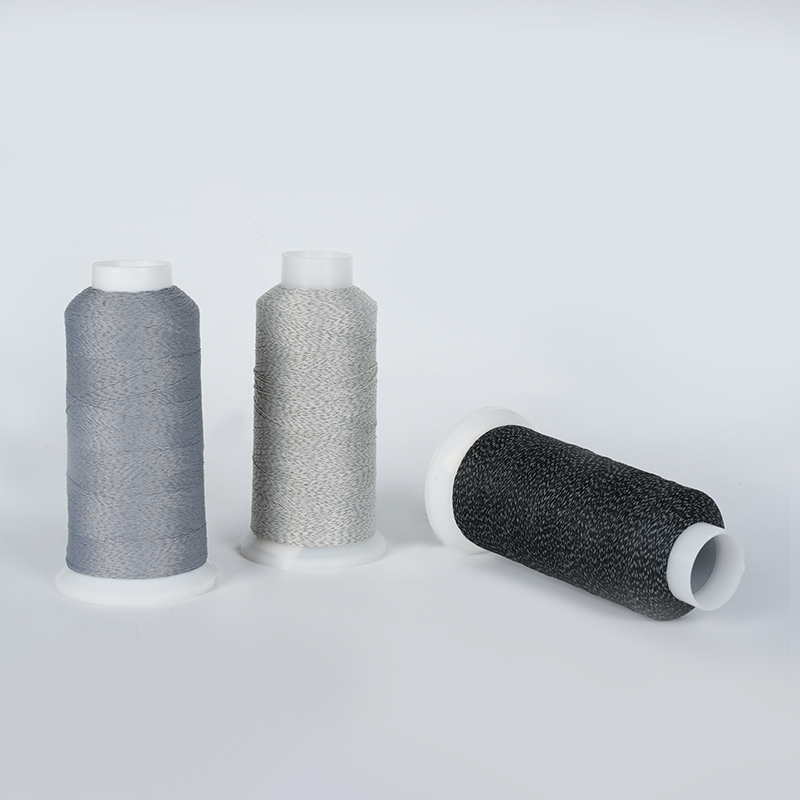
What Is Tex in Textiles? The Linear Density Unit Every Buyer Must Know
Oct 07,2026
Sofa Cloth Material Explained: How to Compare Durability, Weave Types and Cost
Sep 30,2026
Nonwovens Explained: How Bonded Fabrics Differ From Woven and Knitted Textiles
Sep 23,2026
Spandex Material Explained: Stretch Properties, Blend Ratios and Mill Practice
Sep 09,2026Polyester fiber is polyethylene terephthalate (PET), a condensation polymer built from two petrochemical monomers: purified terephthalic acid (PTA) and monoethylene glycol (MEG).
Some older lines still use dimethyl terephthalate (DMT) instead of PTA. The polymer that results is identical, but the DMT route gives off methanol as a byproduct, so modern fiber plants prefer PTA, which produces only water during the esterification step.
Fiber-grade PET is defined by intrinsic viscosity (IV), normally 0.60 to 0.70 dL/g. Resin above 0.72 dL/g is stiffer and better suited to bottle grade, while below 0.55 dL/g the melt spins into filament too weak to draw reliably.
Additives enter before spinning: titanium dioxide creates semi-dull or full-dull luster, masterbatches give dope-dyed color, and heat stabilizers protect the polymer during high-temperature drawing.
A less common variant, polycyclohexylenedimethylene terephthalate (PCDT), uses a different glycol and offers better resilience for upholstery yarns. More than 95% of the polyester fiber produced worldwide is PET, so the process described here starts and ends with that polymer.
Polymerization happens before spinning, and the consistency of this stage determines everything that follows.
MEG and PTA first react at 190 to 230 C under pressure to form bis(2-hydroxyethyl) terephthalate, a low-molecular-weight intermediate. The second stage runs at 260 to 280 C under near-vacuum as excess MEG is distilled off and the polymer chains grow. Antimony, titanium, or germanium compounds catalyze the reaction, and the process stops when the melt reaches the target IV.
Molten PET is then extruded into strands, cooled in chilled water, and chopped into chips of roughly 3 to 4 mm. The chips are crystallized and dried to below 30 ppm moisture before they can be melted again. Water attacks PET at spinning temperature and cleaves the molecular chain, so a wet chip means a weak filament.
Melt spinning converts dried PET chips into continuous filament in one uninterrupted operation, and it is the fastest step in the whole chain.
Take-up speed is the main lever: higher speed imprints more molecular orientation into the filament, which reduces the draw ratio needed later and produces a yarn with a different shrinkage profile.
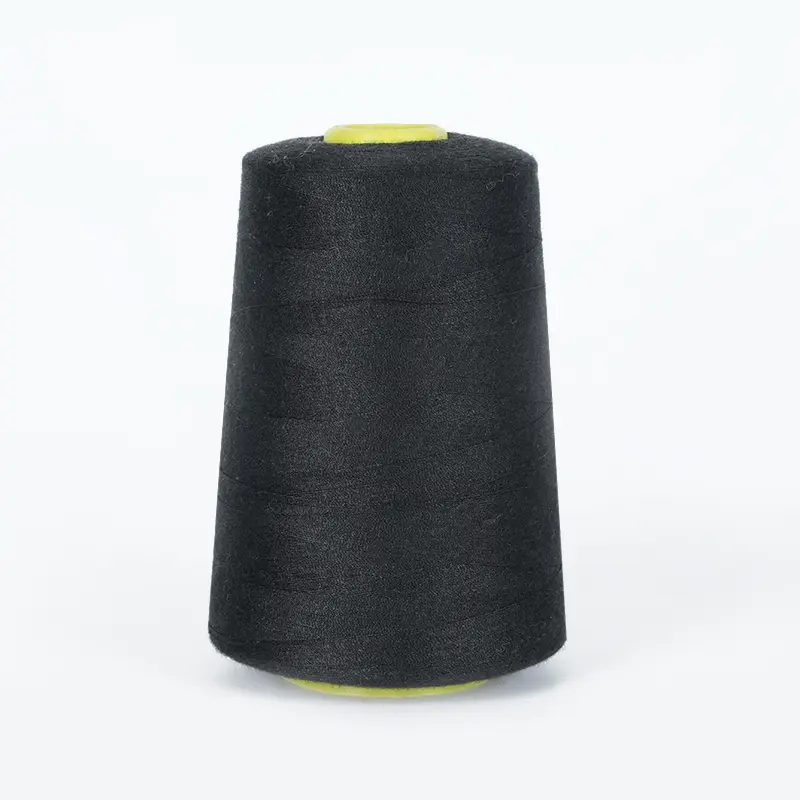
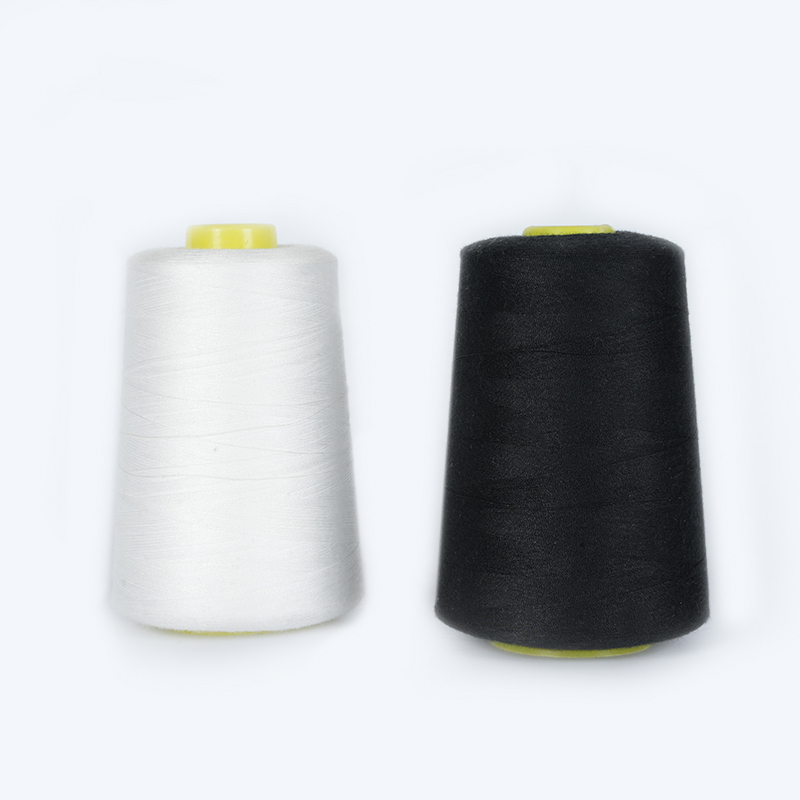 Polyester Sewing Thread with Low Elongation and Soft TextureThis polyester sewing thread offers low elongation, no elasticity, and good color fastness. It suits the discussion on drawing because its mechanical properties are shaped by filament orientation and take-up speed.View Product →
Freshly spun filament is too weak and too stretchy to use directly, and drawing is the mechanical step that fixes both problems.
The yarn is stretched 3 to 5 times its original length between heated godet rolls. Polymer chains orient along the fiber axis, tenacity climbs from about 1.5 to 4.0-5.5 g/d, and elongation at break falls from more than 100% to 20-40%. Draw temperature, speed ratio, and the relaxation zone determine the balance between strength and shrinkage.
For a 75D/36F yarn, the spinneret hole diameter sits near 0.2 mm and the draw ratio is set so final elongation stays around 30%; change either parameter and the fabric hand feel changes even though the yarn count does not.
For apparel yarns, a texturing stage usually follows. False-twist texturing heats, twists, and untwists the filament to create crimp, while air-jet texturing loops the filaments with compressed air to create a softer, bulkier structure.
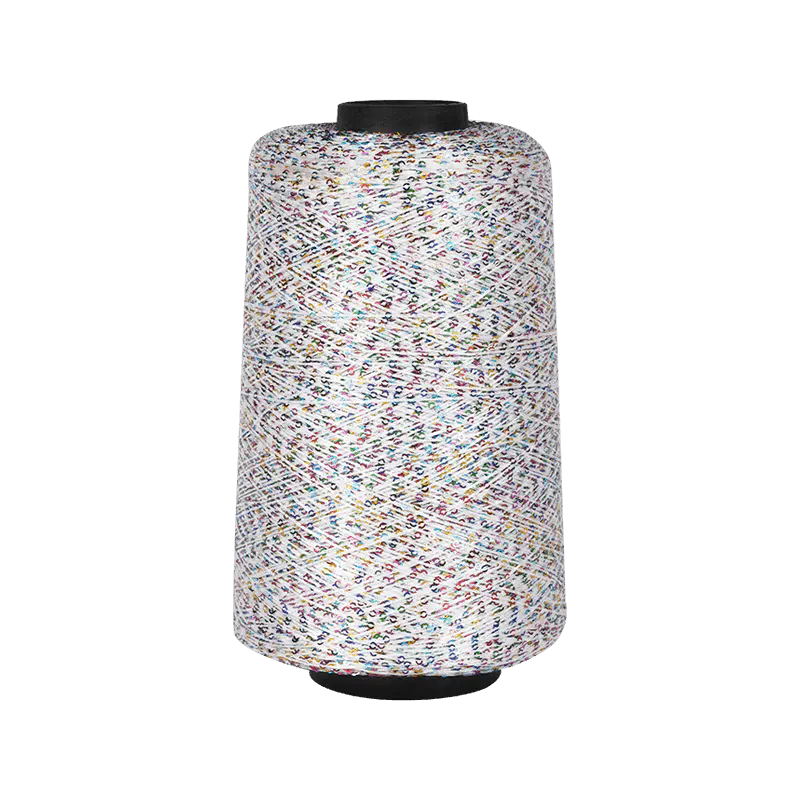
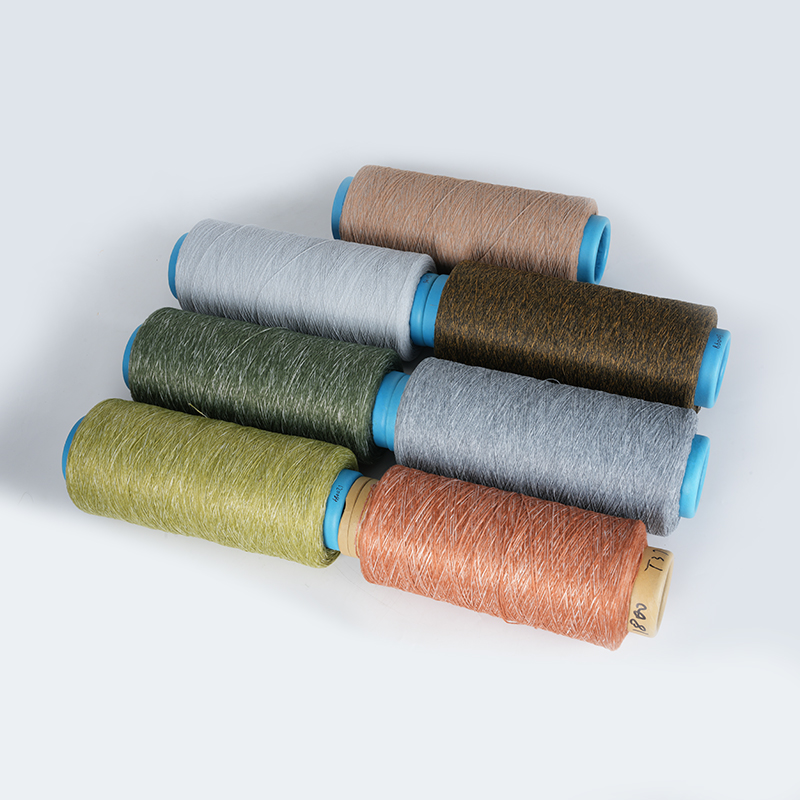 Colored Air Textured Yarn for Knitting and UpholsteryAir-textured yarn mimics staple yarns and can emulate wool, cotton, or linen. Available in deniers like 160D to 1800D, it is useful for carpets, cushions, and pet nests, making it a relevant choice after texturing stages.View Product →
The same polyester melt can become continuous filament yarn or staple fiber cut to a fixed length, and the choice changes the fabric rather than just the yarn.
Continuous strands with a smooth, even surface. Low pilling tendency, high strength, and a crisp drape make it the default for sportswear, linings, curtains, and sewing threads.
Cut lengths of 38 to 90 mm, crimped and spun on cotton or wool systems. It delivers a warmer, softer hand, blends easily with natural fibers, and dominates fleece, knitwear, and workwear.
Staple production adds three steps after drawing: crimping, heat setting at 120 to 180 C, and cutting. Crimp gives bulk and cohesion, heat setting locks the crimp in place, and the cut length is matched to the spinning system that will process the fiber.
Polyester is specified by numbers rather than adjectives, and five parameters cover most practical sourcing risks.
| Parameter | Typical range | Practical impact |
| Denier per filament | 1.5 to 6.0 | Hand feel, fabric cover, shade uniformity |
| Tenacity | 4.0 to 5.5 g/d | Stitching strength, rope and belt durability |
| Elongation at break | 20 to 40% | Stretch and recovery in fabric form |
| Hot-air shrinkage | 3 to 7% | Garment washing and ironing stability |
| Moisture regain | 0.4% | Drying speed, static, carrier dyeing behavior |
Because dyeing cannot happen at a boil, cutting corners in polymer quality shows up as shade variation long before it appears as a thread break. Run a small dye uptake trial on any new lot before committing to bulk production.
Most polyester is dyed in yarn or fabric form, but dope-dyed fiber is colored during spinning, which eliminates the dye bath entirely and improves colorfastness.
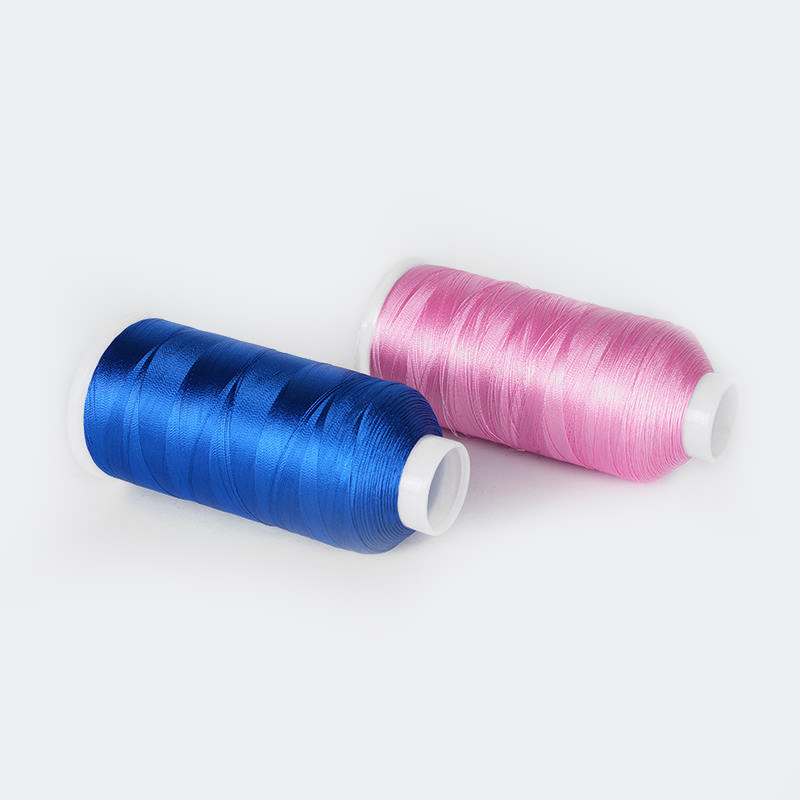 Polyester Embroidery Thread with High Strength and ElasticityMade from polyester FDY, this embroidery thread is strong, fade-resistant, elastic, and wrinkle-resistant. It complements the context of dope-dyed fiber by offering a durable option for embroidery applications.View Product →
Recycled polyester follows nearly the same route, and only the starting point changes.
Post-consumer PET bottles are washed, flaked, dried, and melted, then either re-polymerized or fed directly into a spinning line. Mechanically recycled rPET usually enters with a lower IV than fresh chip, so producers blend it with virgin polymer or run solid-state polymerization to rebuild molecular weight.
GRS certification verifies the recycled content claim, which matters when a brand reports Scope 3 textile emissions or tracks recycled input ratios. For the feedstock side, see how recycled yarn is made and what raw materials are used.
Virgin polyester requires petroleum-derived MEG and PTA, but recycled polyester replaces up to 100% of that feedstock with post-consumer PET bottles. The resulting fiber is still PET with the same chemical and mechanical properties.
PET begins to degrade noticeably above 300 C. Spinning is kept just above the melting point, at the lowest temperature that still gives a stable flow, in order to protect molecular weight and avoid gel formation.
A spinning line produces a wound bobbin in minutes, but the complete chain from raw monomer to fabric-ready filament usually takes one to two days when crystallization, drying, drawing, and setting are included.
No. A drawn staple fiber has essentially the same tenacity as a drawn filament of the same denier, because both go through the same orientation step. The difference is tactile, not mechanical strength.
Your email address will not be published. Required fields are marked *