English
 русский
 Español
News
Home / News / Industry News / How do Knitted Yarns enhance the wearing experience through comfort and functionality?
Nonwovens Explained: How Bonded Fabrics Differ From Woven and Knitted Textiles
Sep 23,2026
Spandex Material Explained: Stretch Properties, Blend Ratios and Mill Practice
Sep 09,2026
What Is Twill Fabric? Weave Structure, Types, Weights, and Real-World Uses
Sep 16,2026
What Is Microfiber Made Of? Polyester, Polyamide Ratios and Fiber Facts
Sep 02,2026
Sequin Yarn for Knitting: Sparkle Effects & Fashion Textiles
Aug 26,2026Knitted yarn, as an important raw material in the textile industry, is widely used in the production of various fabrics. Whether for everyday clothing, home furnishings, or sportswear, knitted yarn plays an indispensable role. Its texture, elasticity, and adaptability make it a fundamental material for weaving various knitted fabrics.
Knitted yarn is a type of textile yarn specifically used for the production of knitted fabrics. Its raw materials are generally selected from natural or chemical fibers and processed through special techniques to form a type of yarn suitable for knitting. The design and production of knitted yarn focus on its high elasticity, extensibility, and tensile strength, ensuring the structural stability and comfort of the fabric during the knitting process.
Compared to woven yarn, knitted yarn has greater elasticity and flexibility, making knitted fabrics more comfortable and adaptable, meeting people's diverse needs for clothing and fabrics. The formation process of knitted yarn usually involves the insertion of knitting needles and the pulling of the yarn to create a unique knitted structure, giving the fabric a comfortable feel and excellent stretchability.
One of the most significant characteristics of knitted yarn is its excellent elasticity and stretchability. Because the fibers in knitted yarn are twisted in a spiral shape within the yarn structure, they can effectively absorb external forces and exhibit good recovery capabilities when stretched. This characteristic allows knitted fabrics to adapt to body curves and provide a more comfortable wearing experience.
Due to the textile process of its fibers, knitted yarn results in a smoother and softer fabric surface. The soft feel of the yarn gives a skin-friendly sensation, reducing friction and irritation to the skin, and improving wearing comfort. Especially in some high-end knitted products, softness is often one of the important criteria for measuring quality.
The textile structure of knitted yarn creates more gaps between its fibers, which not only improves the breathability of the fabric but also enhances moisture absorption. Especially in products such as sportswear or underwear, the breathability and moisture-wicking properties of knitted yarns help regulate body temperature, keeping the wearer dry and comfortable.
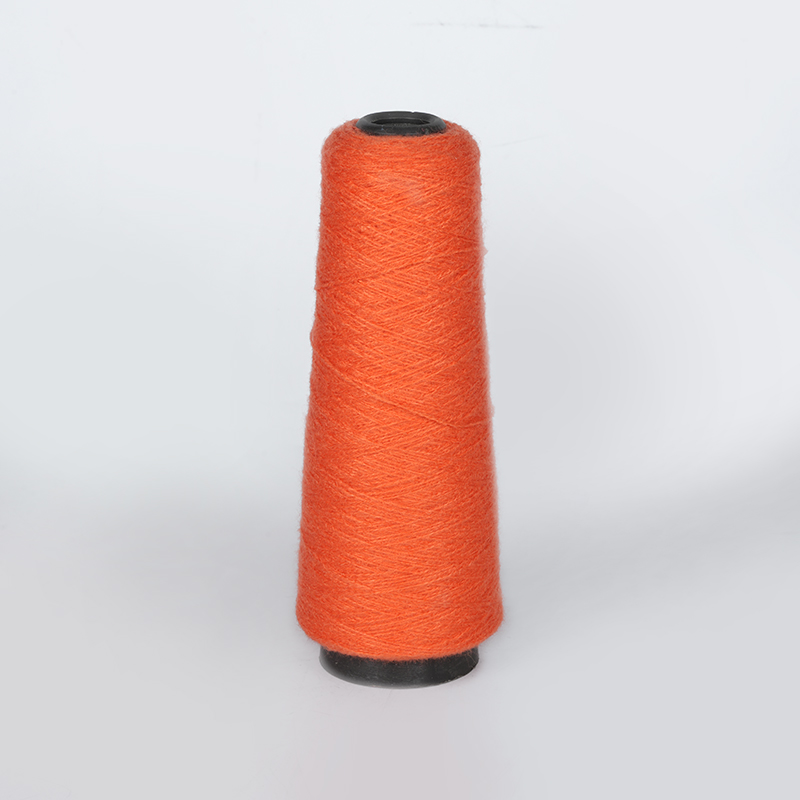
Based on their different characteristics and uses, knitted yarns can be classified into several types, the most common of which are:
Polyester knitted yarn is produced using polyester fibers as raw material. It has high strength and good wear resistance, making it suitable for various types of knitted fabrics. Polyester yarn has good elasticity and high tensile strength, maintaining its shape and resisting deformation in most cases. It is widely used in sportswear, casual wear, and home furnishings.
Cotton knitted yarn uses natural cotton as raw material, possessing natural skin-friendliness and comfort. Due to the good moisture absorption and breathability of cotton fibers, cotton knitted fabrics are particularly suitable for summer wear, effectively absorbing sweat and keeping the wearer dry. At the same time, cotton yarn also has good softness and natural antibacterial properties, making it a preferred choice for everyday clothing and underwear.
Wool yarn mainly uses natural wool as raw material. It is characterized by strong warmth retention and excellent elasticity, making it especially suitable for high-end knitted fabrics. Through its unique fiber structure, wool yarn can regulate body temperature and maintain the wearer's comfort, and is therefore often used in the production of winter warm clothing and sweaters.
Nylon yarn is a type of yarn made from polyamide fibers, possessing excellent durability and heat resistance. Its elongation is moderate, ensuring both comfort and a certain degree of wear resistance. It is commonly used in the production of sportswear, jackets, and fashion clothing.
Knitted yarns are widely used in the apparel industry, especially in sportswear, loungewear, underwear, and sweaters. Knitted yarns provide great comfort and elasticity in these everyday garments. Depending on the different yarn materials, designers can choose suitable knitted fabrics for various seasons and occasions, thus meeting consumers' multiple needs for comfort, functionality, and aesthetics.
Besides the apparel industry, knitted yarns also have important applications in the field of home furnishings. Knitted fabrics are commonly used to make bedding, pillowcases, sofa covers, and other home textile products. These knitted fabrics have excellent softness, comfort, and breathability, providing people with a better home experience.
Some special knitted yarns are used in the automotive industry and other industrial fields, mainly for making seat fabrics, seat belts, filters, and other components. Due to their high strength and elasticity, knitted yarns can perform well in these demanding environments.
The production process of knitted yarns is relatively complex, usually including multiple stages such as fiber preparation, spinning, dyeing, and finishing. During the spinning process, fibers are processed through steps such as carding, stretching, and twisting to ensure the strength, uniformity, and suitability of the yarn. During production, manufacturers adjust the yarn according to its final use, such as adjusting the thickness and density of the yarn to meet the needs of different products.
The main difference between knitted yarn and woven yarn lies in their structure and uses. Knitted yarn has a more elastic and stretchable structure, suitable for producing fabrics with higher comfort and adaptability, while woven yarn is more often used for flat fabrics, suitable for making more stable and even fabrics.
For winter clothing, wool knitted yarn is the best choice because it has excellent thermal insulation properties and good elasticity, effectively regulating body temperature and keeping the wearer warm.
Dyeing is an important part of the knitted yarn production process. Due to the strong hygroscopicity of knitted yarn fibers, the hygroscopicity and uniformity of the yarn need to be considered during dyeing, so controlling the dyeing process is very important.
What unique charm can Fancy Yarn add to your clothing designs?
2026-01-15Why Is Color Polyester Yarn Becoming the Preferred Choice for Sustainable Fashion?
2026-02-01Your email address will not be published. Required fields are marked *