English
 русский
 Español
News
Home / News / Industry News / How does recycled yarn perform? Can it meet the demands of high-end textiles?
Nonwovens Explained: How Bonded Fabrics Differ From Woven and Knitted Textiles
Sep 23,2026
Spandex Material Explained: Stretch Properties, Blend Ratios and Mill Practice
Sep 09,2026
What Is Twill Fabric? Weave Structure, Types, Weights, and Real-World Uses
Sep 16,2026
What Is Microfiber Made Of? Polyester, Polyamide Ratios and Fiber Facts
Sep 02,2026
Sequin Yarn for Knitting: Sparkle Effects & Fashion Textiles
Aug 26,2026With the popularization of sustainable development concepts, the textile industry is undergoing profound changes. Traditional yarn production relies heavily on natural resources and energy, while the emergence of recycled yarn provides the industry with an environmentally friendly, economical, and efficient alternative. Recycled yarn not only has innovative advantages in material composition but also achieves breakthroughs in textile performance, becoming a focus of attention for textile companies and designers.
Recycled yarn refers to a new type of yarn made by recycling waste textiles, industrial scraps, or synthetic fiber materials such as polyester, through scientific processing and respinning. Its core lies in "recycling," reducing raw material consumption, lowering environmental impact, and achieving green textile production. Compared to traditional yarn, recycled yarn may contain fibers from multiple sources, and this blended structure gives the yarn a unique texture and performance characteristics.
In terms of material composition, recycled yarn is not limited to common fibers such as cotton, polyester, and nylon; it can also combine fibers with different properties through innovative technologies to meet the needs of different textiles. This flexibility enables the widespread application of recycled yarn in apparel, home textiles, and industrial fabrics.
The production process of recycled yarn is more complex than that of traditional yarn, but technological advancements have led to a gradual stabilization of its quality. The entire process typically includes fiber recycling, washing, separation, and respinning. The recycling stage requires the sorting and pretreatment of raw materials to ensure the fibers maintain their integrity and spinnability in subsequent processes. The washing and separation processes remove impurities and unusable fibers, improving the purity of the recycled yarn. Finally, through modern spinning technology, the treated fibers are re-made into yarn, maximizing the value of recycling.
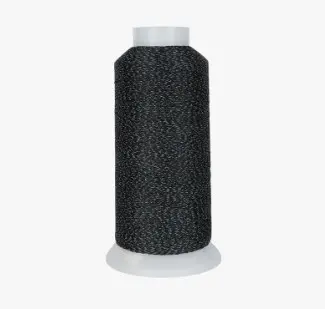
In terms of production processes, the application of innovative equipment and intelligent management systems has continuously improved the fiber uniformity, strength, and softness of recycled yarn, thereby meeting the quality requirements of high-end textiles. At the same time, process optimization has also reduced energy consumption, further demonstrating the environmental benefits of recycled yarn.
Recycled yarn is not inferior to traditional yarn in terms of performance; in fact, it exhibits unique advantages in certain aspects. Its main characteristics include good fiber resilience, softness, and diverse textile adaptability. Fibers from different sources, after scientific processing, can be transformed into yarns with rich textures and a comfortable feel, suitable for various fabric structures and processing requirements.
The strength and abrasion resistance of recycled yarns are enhanced through modern processes, ensuring stable performance in apparel, home textiles, and functional textiles. Regarding color performance, advancements in fiber processing and dyeing technologies allow recycled yarns to achieve highly uniform dyeing results, meeting designers' requirements for color and visual effects.
The biggest highlight of recycled yarns lies in their environmental attributes. By utilizing waste fibers, dependence on natural resources is reduced, while simultaneously lowering textile wastewater and chemical emissions. In the context of global advocacy for carbon neutrality and resource recycling, recycled yarns have become an important way for textile companies to fulfill their social responsibility.
Sustainability is not only reflected in raw materials but also in the production process and product lifecycle. The application of recycled yarns extends the fiber's lifespan and reduces the environmental pressure of waste. This green production concept is gradually becoming an important standard for textile design and market selection.
In terms of product applications, recycled yarns have enormous potential. It can be applied to various fields such as apparel fabrics, knitwear, home textiles, and industrial fabrics. In apparel design, recycled yarn not only meets the requirements of comfort and durability but also aligns with environmental protection principles, increasing a brand's market competitiveness.
Furthermore, the flexibility of recycled yarn in blending technology allows it to be combined with natural fibers or high-performance functional fibers to create unique fabric effects. This product differentiation provides textile companies with the possibility of exploring new markets and promotes the development of textiles towards higher added value.
Recycled yarn is made by recycling waste fibers, reducing the consumption of virgin resources. At the same time, its textile performance is improved, achieving results comparable to or even better than traditional yarn.
Recycled yarn is used in apparel, knitwear, home textiles, and functional fabrics. It is highly adaptable and can be blended with natural fibers or functional fibers.
Its core lies in recycling fibers, reducing production energy consumption, and minimizing wastewater and chemical emissions, demonstrating environmental value throughout the entire lifecycle from raw materials to products.
Modern-processed recycled yarn possesses excellent softness, resilience, and abrasion resistance, meeting the requirements of high-end fabrics.
What are the unique advantages of polyester printing fabric? What applications is it suitable for?
2025-12-01Metallic Yarn: A Unique Choice for Enhancing Fabric Texture and Performance
2025-12-15Your email address will not be published. Required fields are marked *