English
 русский
 Español
News
Home / News / Industry News / How can recycled yarn drive environmental protection and innovation in the textile industry?
Nonwovens Explained: How Bonded Fabrics Differ From Woven and Knitted Textiles
Sep 23,2026
Spandex Material Explained: Stretch Properties, Blend Ratios and Mill Practice
Sep 09,2026
What Is Twill Fabric? Weave Structure, Types, Weights, and Real-World Uses
Sep 16,2026
What Is Microfiber Made Of? Polyester, Polyamide Ratios and Fiber Facts
Sep 02,2026
Sequin Yarn for Knitting: Sparkle Effects & Fashion Textiles
Aug 26,2026With increasingly serious environmental problems, the textile industry is facing growing pressure for sustainable development. Recycled yarn, as an environmentally friendly and innovative product, has gradually become a focus of attention in the industry. It not only plays an important role in reducing textile waste and saving resources but also promotes the development of the textile industry towards a green and environmentally friendly direction.
Recycled yarn is a new type of yarn made by reprocessing and reusing discarded textile materials (such as old clothes and waste textiles). The production process of recycled yarn is relatively complex, but it provides a sustainable development solution for the textile industry.
The first step in making recycled yarn is to select suitable recycled materials. These raw materials generally come from old clothes, damaged textiles, and defective products from the production process. Through screening, cleaning, and disinfection, these wastes are transformed into usable fibers. The key at this stage is to ensure the quality of the recycled raw materials to guarantee the textile performance of the final yarn.
After the raw materials are cleaned, the next step is fiber separation and regeneration. Traditional old clothes or fabrics are usually composed of a mixture of different types of fibers, such as cotton and polyester. To make recycled yarn, these fibers need to be classified and separated first. After mechanical treatment, the fibers are stretched and combed, ultimately forming regenerated fibers. This process not only effectively removes impurities but also ensures that the length and strength of the fibers meet textile requirements.
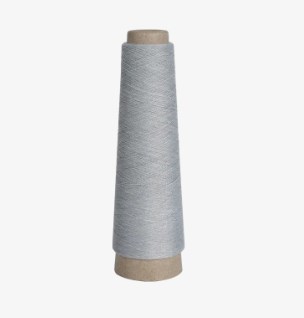
After the fibers are processed into a suitable form, they enter the spinning stage. In this process, the regenerated fibers are processed into yarn using different spinning technologies. The thickness, strength, elasticity, and other properties of the yarn can be adjusted according to different needs. Recycled yarn, after spinning, often has good softness and durability, meeting the application needs of clothing, home textiles, and other fields.
As a new type of environmentally friendly product, recycled yarn not only possesses the functional characteristics of traditional yarn but also demonstrates unique advantages in many aspects.
One of the biggest advantages of recycled yarn is its ability to save natural resources. Taking cotton as an example, cotton cultivation requires vast amounts of water and land resources, while the production of recycled yarn reduces reliance on these resources. Recycling waste textiles effectively reduces waste accumulation and environmental pollution.
The production process of recycled yarn consumes less energy compared to traditional textile manufacturing. Traditional textile processes, such as dyeing and finishing, require significant energy. Recycled yarn production largely avoids these processes during the regeneration stage, significantly reducing the carbon footprint and contributing to the reduction of greenhouse gas emissions.
Although the production process of recycled yarn is more complex, after meticulous processing, its quality and performance can rival those of ordinary yarn. Recycled yarn often possesses good elasticity, strength, and comfort, making it suitable for various applications in clothing, home furnishings, and industrial products.
However, the production of recycled yarn also faces some challenges. Firstly, the production of recycled yarn requires higher technical requirements; from raw material selection and fiber separation to textile processing, precise equipment and processes are necessary. Secondly, due to variations in the quality of recycled raw materials, the performance of recycled yarn may be inconsistent. Ensuring product consistency is a key challenge in current technological development.
Due to its environmentally friendly and high-performance characteristics, recycled yarn is widely used in multiple fields.
In the apparel industry, the application of recycled yarn is becoming increasingly widespread. Many brands have begun to use recycled yarn to manufacture fashionable and environmentally friendly clothing. By using recycled yarn, brands can not only enhance the environmental value of their products but also cater to consumer demand for sustainable fashion. Especially in sportswear and casual wear, recycled yarn is an ideal choice due to its comfort and durability.
The home textile industry also benefits from recycled yarn. Home products such as bedding, curtains, and carpets made from recycled yarn not only have a good feel and durability but also reduce the burden on the environment. Consumers choosing these environmentally friendly products become more aware of the importance of sustainable development.
Recycled yarn is not only important in the consumer goods sector but also plays a significant role in the industrial field. High-strength recycled yarn is widely used in the production of various industrial products, such as protective clothing, filter fabrics, and automotive interiors. These products often require high strength and durability, and recycled yarns, through efficient processing techniques, can fully meet these demands.
The production and application of recycled yarns are still in a continuous process of development. With continuous technological advancements, the performance of recycled yarns will further improve, and their application scope will continue to expand. For the textile industry, the popularization of recycled yarns is not only an environmentally friendly choice but also an inevitable trend driving the sustainable development of the industry.
In the future, recycled yarns will focus more on innovation and process improvement, producing more efficient and low-energy recycled yarn products. Meanwhile, with increasing consumer environmental awareness, the market demand for recycled yarns will gradually increase, which will encourage more companies to participate in the production and application of recycled yarns, promoting the development of this green industry.
The quality of recycled yarns is often comparable to traditional yarns, and in some cases, even surpasses some low-quality conventional yarns. Through efficient cleaning, separation, and processing, recycled yarns can possess good strength, elasticity, and comfort. However, due to variations in raw materials, the quality of recycled yarns may sometimes fluctuate.
Recycled yarns are usually slightly more expensive than traditional yarns, mainly due to the higher technical requirements and more sophisticated processing techniques required in the recycling process. However, with advancements in recycled yarn production technology and large-scale production, prices are expected to gradually decrease, making them a more competitive option.
Recycled yarns have a wide range of applications and can be used in many types of fabrics, including clothing, home textiles, and industrial products. Depending on different needs, the thickness, elasticity, and strength of recycled yarns can be adjusted to suit different weaving and usage requirements.
Recycled yarns offer significant environmental advantages. By recycling waste textiles, they reduce the consumption of natural resources and minimize waste generation and environmental pollution. Furthermore, the production process of recycled yarns has lower energy consumption, further reducing carbon emissions and making them an important force in promoting the sustainable development of the textile industry.
Metallic Yarn: A Unique Choice for Enhancing Fabric Texture and Performance
2025-12-15How do Garment Fabric Dyeing and Finishing Processes Affect Fabric Performance and Wearing Experience?
2026-01-01Your email address will not be published. Required fields are marked *