English
 русский
 Español
News
Home / News / Industry News / How to Calculate Thread Size: Measure Pitch, Diameter, and TPI for Any Bolt

How to Calculate Thread Size: Measure Pitch, Diameter, and TPI for Any Bolt
Nov 11,2026
What Is Silk Made Of? Fibroin, Sericin, and the Fiber Processing Explained
Nov 04,2026
Properties of Linen Fibre: A Complete Guide to Strength, Moisture and Care
Oct 28,2026
Dri-FIT Nike Material Explained: How Moisture-Wicking Fabric Technology Works
Oct 21,2026
how to make polyester fiber: Applications, Selection Criteria, and Practical Guidance
Oct 14,2026A guide-rail bolt on a knitting machine snaps during the night shift. The part number is worn off, the spare-parts cabinet has no match, and the line stays down until a replacement is found. With a caliper and a ruler, you can calculate thread size from the part itself in about two minutes.
You can calculate thread size for any standard fastener from two measurements: the major diameter and the pitch, which on inch threads is expressed as threads per inch (TPI). Once those two numbers are known, the full callout - M10 x 1.5, 3/8-16 UNC, or any other standard size - follows directly. This guide covers the measurement procedure, the formulas from ISO 965-1 for pitch diameter and minor diameter, and the mistakes that cause the most returns and rework on the factory floor.
Thread size is the pairing of a nominal diameter with a thread pitch, and it is standardized as a callout. Two bolts with identical diameters but different pitches are not interchangeable, so the second number matters as much as the first.
Thread pitch is the distance between two adjacent thread crests, measured in millimeters on metric fasteners. On inch fasteners, pitch is expressed as threads per inch (TPI): the number of crests counted along a one-inch length.
Three details identify any standard thread:
Diameter tells you which bolt blank to use; pitch tells you how it engages a nut or tapped hole; the form tells you which standard family the part belongs to. Getting all three right is the entire job of thread identification.
Measure the thread at its widest point, across the crests, and compare the reading against standard nominal values. A dial or digital caliper is accurate enough for identification; a micrometer is reserved for inspection-grade work.
Clean the threaded section with solvent or a wire brush. A single burr or chip can add 0.1 mm to the reading and push you into the wrong nominal size.
Open the caliper jaws wider than the bolt, then close them over the crests. Apply light pressure until the jaws just touch the high points of the thread.
Rock the caliper slightly to find the maximum reading. The largest value is the major diameter, because the crests are the widest part of the profile.
Repeat the measurement 90 degrees around the part and keep the larger number. Worn or out-of-round threads read small on one side, and identification should use the unworn value.
Compare the result with a standard size table and round to the nearest nominal diameter. An M6 measures about 5.97 to 6.00 mm; a 1/4-inch bolt measures about 6.35 mm.
| Nominal size | Major diameter (mm) | Standard pitch (mm) |
| M3 x 0.5 | 3.0 | 0.5 |
| M4 x 0.7 | 4.0 | 0.7 |
| M5 x 0.8 | 5.0 | 0.8 |
| M6 x 1.0 | 6.0 | 1.0 |
| M8 x 1.25 | 8.0 | 1.25 |
| M10 x 1.5 | 10.0 | 1.5 |
| M12 x 1.75 | 12.0 | 1.75 |
| M16 x 2.0 | 16.0 | 2.0 |
| M20 x 2.5 | 20.0 | 2.5 |
If the measured diameter falls between two standard sizes, verify the part against the original equipment drawings or contact the machine builder before cutting a custom replacement.
Measure the pitch before you write down the diameter, because pitch separates metric from inch threads faster than any other check. For inch threads, count crests over one inch and record TPI; for metric threads, measure the crest-to-crest distance in millimeters.
Lay a steel rule along the thread axis and count the thread peaks over exactly one inch. The count is the TPI value for unified inch threads such as 1/4-20 or 3/8-16.
For a metric part, measure the distance across ten crest-to-crest gaps with calipers, then divide by ten. This gives the average pitch in millimeters and avoids the error of measuring one imperfect gap.
Confirm the reading with a thread pitch gauge. The matching leaves verify both the pitch and the 60-degree thread form in a single step.
Coarse pitch is the default series for most metric fasteners. Fine-pitch versions, such as M10 x 1.25, are specified where vibration resistance, thread engagement, or adjustment precision matters more than assembly speed.
Once the diameter and pitch are measured, write the size in the correct format so purchasing and the machine shop can act on it. A metric callout lists the nominal diameter and pitch in millimeters; an inch callout lists the fractional diameter, TPI, and thread series.
| Callout | Major diameter | Pitch | System |
| M6 x 1.0 | 6.0 mm | 1.0 mm | Metric coarse |
| M10 x 1.5 | 10.0 mm | 1.5 mm | Metric coarse |
| M12 x 1.75 | 12.0 mm | 1.75 mm | Metric coarse |
| 1/4-20 UNC | 6.35 mm | 20 TPI | Inch coarse |
| 3/8-16 UNC | 9.53 mm | 16 TPI | Inch coarse |
| 1/2-13 UNC | 12.7 mm | 13 TPI | Inch coarse |
A 1.5 mm metric pitch works out to 16.9 TPI, close enough that an M10 bolt can be mistaken for a 3/8-16 part by eye. Always confirm the diameter in millimeters and the pitch before ordering a replacement.
For inspection, thread cutting, and tap selection, calculate the pitch diameter and minor diameter from the nominal diameter and pitch. The values come from the ISO 965-1 basic profile and apply to both metric and unified threads.
Use the pitch P and the nominal diameter D, both in millimeters:
H = 0.8660 x 1.75 = 1.5155 mm
d2 = 12.0 - 0.6495 x 1.75 = 12.0 - 1.1366 = 10.8634 mm
d1 = 12.0 - 1.0825 x 1.75 = 12.0 - 1.8944 = 10.1056 mm
These are basic profile dimensions. The tolerance class, for example 6g external or 6H internal, defines the actual allowed range.
The pitch diameter is the most important functional dimension: it controls how the flank surfaces contact the mating thread. The minor diameter matters for tap drill selection and for estimating the strength of the threaded section.
Wrong thread identification costs real downtime, and guesswork in precision manufacturing is never cheaper than measurement. A bolt with the right diameter but the wrong pitch starts by hand, seizes halfway, and can damage the mating thread, turning a ten-minute replacement into a re-tapping job.
Textile plants are full of threaded components: loom tension adjusters, knitting machine guide rails, spinning frame rollers, and bobbin holders all rely on exact thread fits. A crushed thread, a stretched stud, or a cross-threaded nut on any of these stops a line. Knowing how to identify the size on the spot, and how to write the callout so a supplier sends the right part, keeps maintenance cycles short.
Thread identification is the process of matching measured major diameter, pitch, and thread form to a standardized callout before ordering, cutting, or specifying a replacement.
The same logic applies when you move from machine threads to sewing threads. A sewing thread is specified by ticket number, tex, and breaking strength in the same way a bolt is specified by diameter, pitch, and tolerance. Matching the specification to the application prevents seam failure, needle breakage, and rework. JinDun Textile Co., Ltd. has 18 years of experience manufacturing yarns and threads, including polyester sewing thread selected for shrinkage stability, plus nylon sewing thread for high-strength seams. If a production challenge involves thread selection, contact the JinDun team with the application details.
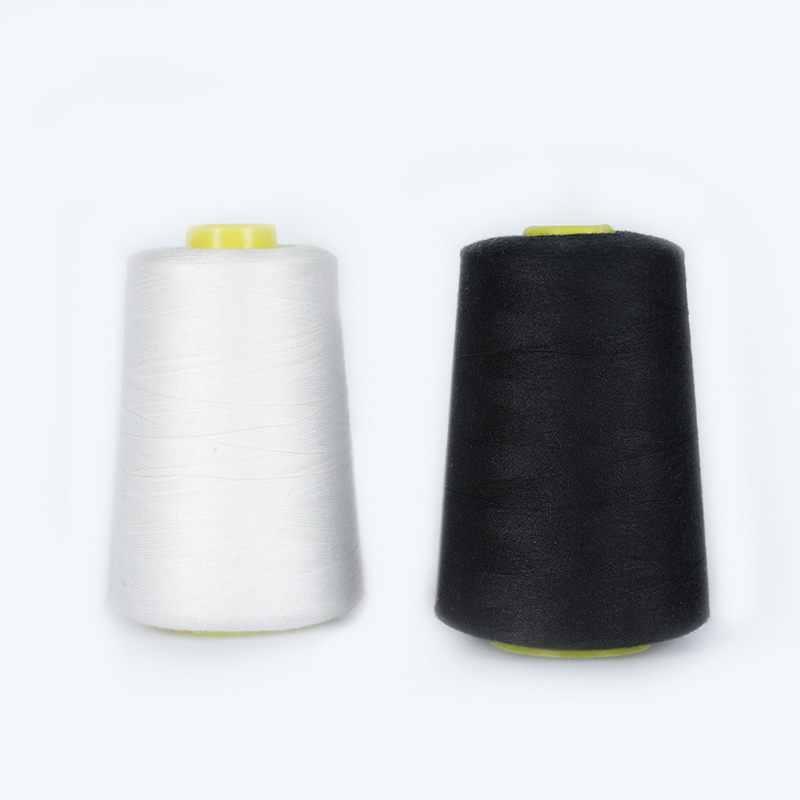 Polyester Sewing Thread for Dimensional StabilityThis polyester sewing thread offers low elongation and good color fastness, making it suitable for seams where shrinkage stability matters during production.View Product →
 Nylon Sewing Thread for High-Strength SeamsThis nylon sewing thread provides high strength, elasticity, and abrasion resistance, making it a reliable option for demanding sewing applications.View Product →
Thread pitch is the crest-to-crest distance in millimeters on a metric thread. TPI is the number of crests counted over one inch on an inch thread. Convert between them with TPI = 25.4 / pitch (mm), or pitch (mm) = 25.4 / TPI.
Subtract 0.6495 times the pitch from the nominal diameter: d2 = D - 0.6495 x P. For an M10 x 1.5 thread, d2 = 10.0 - 0.9743 = 9.0257 mm.
Measure the pitch and the diameter. Metric threads use millimeter diameters and pitches such as 0.5, 0.7, 1.0, 1.5, and 1.75 mm. Inch threads use fractional-inch diameters and whole-number TPI values such as 20, 16, and 13. Both metric and unified threads use a 60-degree angle; Whitworth threads use 55 degrees.
Subtract 1.0825 times the pitch from the nominal diameter: d1 = D - 1.0825 x P. For M12 x 1.75, d1 = 12.0 - 1.8944 = 10.1056 mm. The minor diameter approximates the root of the thread and is used as a reference when selecting tap drill sizes.
Your email address will not be published. Required fields are marked *