English
 русский
 Español
News
Home / News / Industry News / Properties of Linen Fibre: A Complete Guide to Strength, Moisture and Care
Properties of Linen Fibre: A Complete Guide to Strength, Moisture and Care
Oct 28,2026
Dri-FIT Nike Material Explained: How Moisture-Wicking Fabric Technology Works
Oct 21,2026
how to make polyester fiber: Applications, Selection Criteria, and Practical Guidance
Oct 14,2026
What Is Tex in Textiles? The Linear Density Unit Every Buyer Must Know
Oct 07,2026
Sofa Cloth Material Explained: How to Compare Durability, Weave Types and Cost
Sep 30,2026Linen fibre is the most moisture-responsive of the common cellulose fibres, and the properties of linen fibre are measurable long before the fabric reaches a cutting table. A flax stalk yields long, crystalline fibre cells that can hold up to 20 percent of their own weight in moisture without feeling clammy, yet release that moisture quickly enough to keep sweat off the skin. That combination, high absorbency plus fast drying, is rare among natural fibres, and it explains why linen has kept its position in summer apparel, bedding and medical dressings for thousands of years.
For product developers and sourcing teams, the task is not deciding whether linen is a good fibre; it is knowing which property to specify for a garment, a household textile or a medical product, and how that property shifts after spinning, washing or wear. This guide breaks down the properties of linen fibre: chemical structure, moisture behavior, tensile strength, thermal and UV response, and care limits, with the numbers that belong on a spec sheet.
Linen is strong because flax fibre is a bundle of aligned cellulose crystals, and it stretches little for the same reason. Flax is a bast fibre: the strand of stem cells that runs between the bark and the woody core of Linum usitatissimum. Each individual fibre cell in that strand measures 2 to 5 centimeters long and is packed with microfibrils that sit almost parallel to the fibre axis, far more ordered than the twisted, ribbon-like structure of cotton. A typical flax cell contains roughly 70 to 75 percent cellulose, 15 to 20 percent hemicellulose, 2 to 3 percent pectin, and a small fraction of lignin.
That architecture produces three measurable outcomes:
Linen fibre: a cellulose bast fibre extracted from the stem of Linum usitatissimum, characterized by high crystallinity, high dry and wet tensile strength, low elasticity, and rapid absorption and release of moisture.
Linen absorbs up to 20 percent of its own weight in moisture and dries faster than cotton, and that combination is the true source of linen's cool feel. Moisture regain is the standard measurement: the percentage of moisture a bone-dry fibre absorbs in a standard atmosphere of 65 percent relative humidity and 20 degrees Celsius. Flax reaches roughly 8 to 12 percent regain, cotton 7 to 8 percent, and polyester below 0.4 percent.
Moisture regain as a percentage of dry fibre weight at 65 percent relative humidity and 20 degrees Celsius. Approximate literature values.
High regain pulls water vapour into the fibre wall, away from the skin. Linen beats cotton in comfort because of release, not just uptake. Water spreads along the smooth, rod-like flax surface and evaporates quickly in moving air, whereas cotton's twisted fibre traps more water in internal voids as it wets.
Rule of thumb for hot climates: when a garment must manage perspiration over long hours, specify linen or a linen-dominant blend. What you feel as cooling is the evaporation stage, moisture leaving the fabric surface faster than it leaves the skin.
Linen is one of the strongest natural fibres in tension, and it becomes 10 to 20 percent stronger when wet, but it fails under repeated creasing. Dry tenacity of flax is typically 5.5 to 6.5 g/den, against 3.0 to 5.0 g/den for cotton. The wet-strength gain is the opposite of regenerated fibres such as viscose, which lose roughly half their strength when wet.
| Property | Linen (flax) | Cotton |
| Dry tenacity | 5.5-6.5 g/den | 3.0-5.0 g/den |
| Wet strength change | +10-20% | +10-20% |
| Elongation at break | 1.8-3.0% | 3.0-7.0% |
| Moisture regain at 65% RH | 8-12% | 7-8% |
| Drying speed | Fast | Moderate |
| Repeated-crease resistance | Low | Moderate to high |
The durability caveat is flex fatigue, not tensile strength. Linen rarely wears out by abrasion; it breaks precisely where fabric is folded again and again. Permanent pleats, sharp collar creases and pressed hems are the high-risk zones that eventually crack.
Linen conducts heat away from the body, blocks most UV radiation, and shows mild antimicrobial behavior confirmed by clinical textile research. Flax fibre has high thermal conductivity compared with wool or polyester; it does not trap insulating air. Undyed linen fabric is documented to block more than 95 percent of UV radiation, which is why lightweight linen garments and linen curtains serve double duty as sun protection.
The skin-related properties matter beyond comfort. Bulk flax has no natural oils or proteins, so it resists the microbial growth that those materials support. Peer-reviewed work on linen fibre dressings, including a 2022 study in the International Journal of Molecular Sciences, reported microbiological purity, no cytotoxic effect, and accelerated wound closure in a cell model. The same characteristics are why linen bandages have a long history in European pharmacopoeias.
Bottom line for sensitive-skin programs: linen is the safest natural fibre choice. It is smooth, lint-free, breathable, and clinically documented as non-irritating in wound contact.
Linen shrinks in the first wash, creases easily, softens with laundering, and requires controlled finishing to deliver consistent results. Unshrunk linen can lose 4 to 5 percent in the first wash, so commercial programs specify pre-shrunk fabric or garment washing. Creasing is inherent: because of low elastic recovery, linen cannot bounce back after bending.
Care behavior is an advantage in one respect: the more linen is washed, the better the hand feel. Laundering relaxes the fibre surface, producing a softer, smoother and slightly brighter fabric, while tensile strength stays largely intact. Ironing is also forgiving; linen tolerates iron temperatures above 200 degrees Celsius on the three-dot setting, provided the fabric is slightly damp.
When you source linen yarn or fabric for a program, check four things:
For programs where pure linen's cost, shrinkage or care profile is a barrier, a linen-like yarn can reproduce the slubby texture and dry hand feel at a more stable price. JinDun Textile Co., Ltd., a Chinese textile manufacturer with 18 years of production experience, offers a linen-like yarn in its knitted-yarn series, designed for projects that need the linen aesthetic without the dimensional surprises.
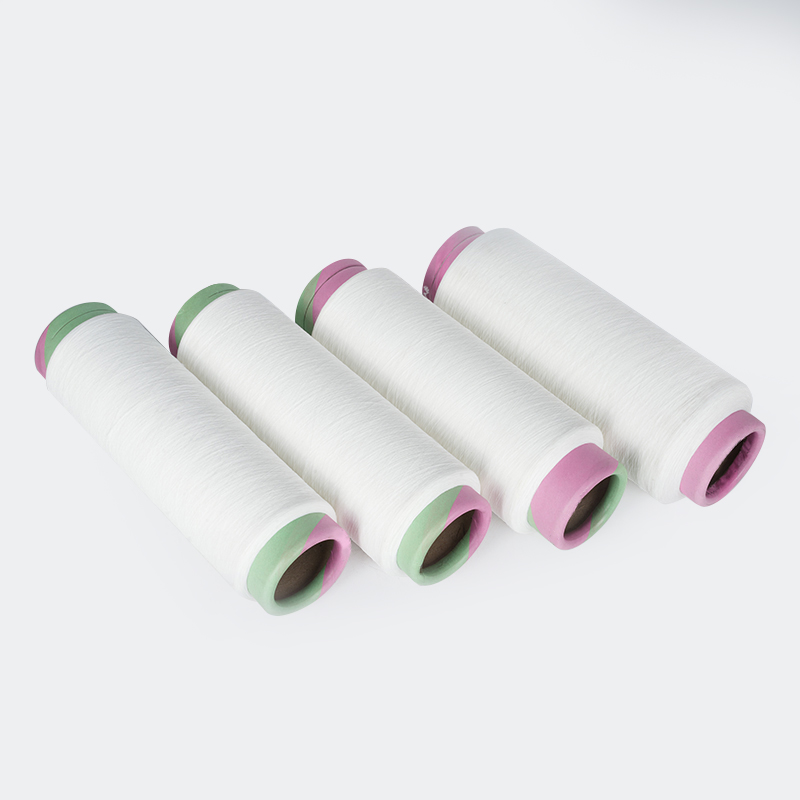 Linen-like yarn with viscose-nylon blend for knitwear and home textilesThis yarn mimics linen's texture and cool feel using 89% viscose and 11% nylon, offering a cost-effective alternative with stable performance. Ideal for knitwear, scarves, and upholstery.View Product →
Before finalizing a specification, request test certificates covering tenacity, moisture regain and shrinkage. The data protect both the design and the production schedule.
These are the four questions buyers and designers ask most when evaluating the properties of linen fibre for a new program.
Yes, on a weight-for-weight basis. Linen's dry tenacity of 5.5 to 6.5 g/den exceeds cotton's 3.0 to 5.0 g/den, and wet strength rises another 10 to 20 percent. The trade-off is low elongation: linen holds shape but does not stretch, so it performs best where controlled stiffness is acceptable.
Because two measurable mechanisms work together. High thermal conductivity moves body heat through the fabric, and rapid moisture transport pulls perspiration away from the skin for evaporation. At equal fabric weight, linen produces a lower microclimate temperature than cotton in humid conditions.
Yes, if it is not pre-shrunk. The first wash can remove 4 to 5 percent of the fabric. Cold washing at 30 degrees Celsius, a low spin cycle and pre-shrunk fabric keep later shrinkage to 1 to 2 percent. Linen also creases; use a three-dot iron with steam unless the fabric has a wrinkle-resistant finish.
Yes. Linen is lint-free, smooth and mildly antimicrobial, and clinical studies of linen dressings report no skin irritation or impaired healing. For next-to-skin apparel, it is among the least allergenic natural fibres available.
The properties of linen fibre are not a marketing story; they are measurable and consistent. Specify the data, test the fabric, and put the garment through one wash cycle before approving bulk production.
Your email address will not be published. Required fields are marked *