English
 русский
 Español
News
Home / News / Industry News / Spandex Material Explained: Stretch Properties, Blend Ratios and Mill Practice
Dri-FIT Nike Material Explained: How Moisture-Wicking Fabric Technology Works
Oct 21,2026
how to make polyester fiber: Applications, Selection Criteria, and Practical Guidance
Oct 14,2026
What Is Tex in Textiles? The Linear Density Unit Every Buyer Must Know
Oct 07,2026
Sofa Cloth Material Explained: How to Compare Durability, Weave Types and Cost
Sep 30,2026
Nonwovens Explained: How Bonded Fabrics Differ From Woven and Knitted Textiles
Sep 23,2026Known as elastane across most of Europe and first synthesized in 1958, spandex material is the stretch engine inside modern knits, wovens and covered yarns. What follows is the mill-side view: what the fiber actually is, how it is made, how much a blend needs, where it earns its place, and how blends lose their bounce.
Spandex material is a synthetic polyether-polyurethane fiber that stretches five to seven times its original length and recovers almost completely, and it is virtually always blended with other fibers rather than used on its own.
American chemist Joseph Shivers and his team at DuPont commercialized the fiber in 1958, and the naming split followed geography: spandex in the United States, elastane nearly everywhere else. The chemistry underneath is consistent either way - soft polyether segments behave like springs, while rigid urethane segments act as anchor points that pull those springs back to rest.
Set against the fibers it usually travels with, that stretch advantage is not close:
Most commercial spandex material is produced by dry spinning a polyurethane solution into hair-fine continuous filaments - a four-stage route that fixes the stretch, heat behavior and dye affinity of every fabric downstream.
The correct share is set by the recovery the garment must deliver - roughly 1 to 3 percent in stretch denim, 4 to 8 percent in fitted tees, and 20 to 30 percent in medical compression. Above what the end use needs, extra elastane only adds cost, edge curl and care problems.
Construction matters as much as percentage. Knitted loops already extend under load before elastane contributes anything, which is why the same 5 percent reads very differently in a circular-knit tee than in a woven twill - a distinction unpacked in how knitted fabric differs from woven fabric.
| End use | Typical spandex share | What the share delivers |
| Stretch denim | 1-3% | Recovery without changing denim hand feel |
| Fitted T-shirts and polos | 4-8% | Shape retention through repeated washing |
| Leggings and cycling kit | 10-15% | Four-way stretch with firm support |
| Swimwear | 15-20% | Snap-back fit under constant water load |
| Medical compression | 20-30% | Sustained, graduated pressure |
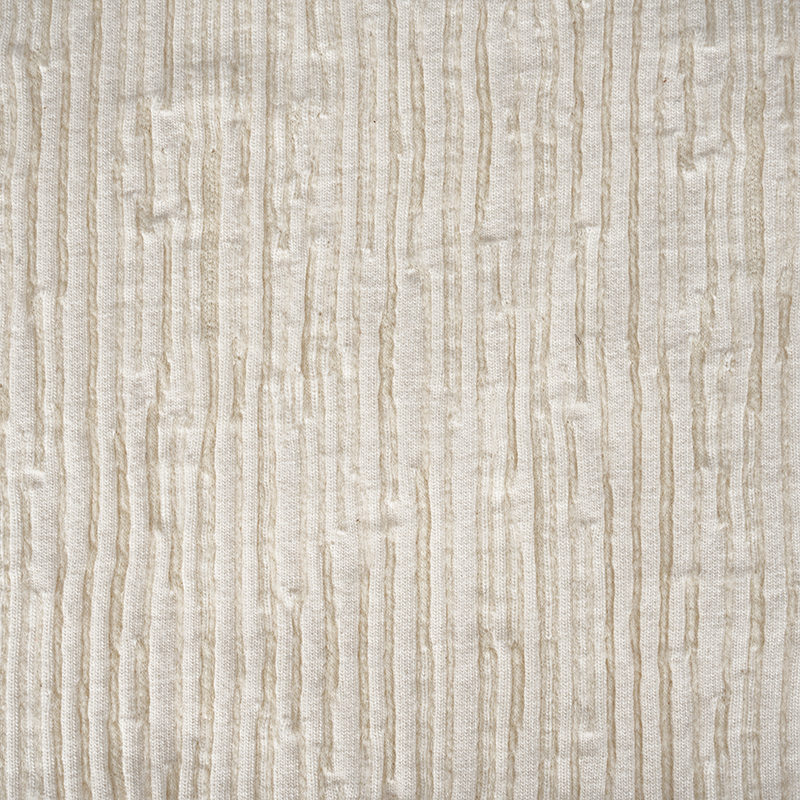 T-Shirt Knitted Jacquard FabricA polyester-spandex knitted jacquard with good drape, breathability and yarn-dyed color fastness, offered at 250-360gsm with customizable patterns. It illustrates how knit construction changes how the same elastane percentage behaves in a tee.View Product →
When comparing supplier quotes, pin down three details before signing anything:
Spandex material earns its keep wherever fabric must move with a body and return to shape; the same chemistry serves a trail-running layer and a sequined stage costume, just through very different constructions.
Stretch in this category is four-way and fatigue-resistant. Leggings, cycling kit and light outer layers depend on air-covered elastane, which keeps the knit surface smooth against skin while recovery survives repeated flexing and laundering. Abrasion resistance and shape retention matter as much as raw stretch, because a bagging knee panel reads as a defect long before the fabric tears.
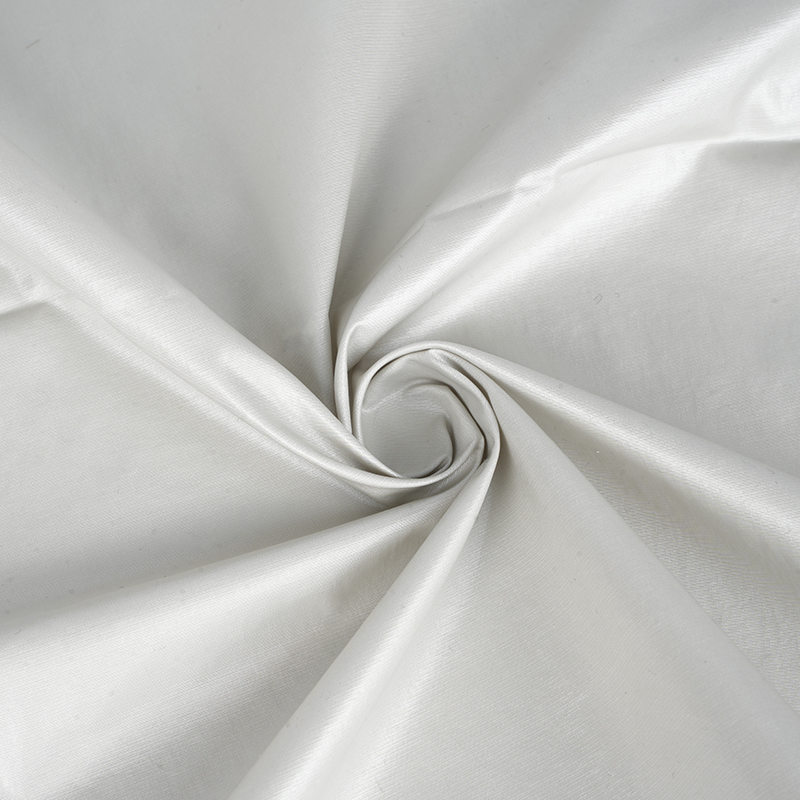 Four-Way Stretch Outdoor Sports FabricMade of 76% nylon and 24% spandex, this fabric suits activities needing waterproofing, breathability and comfort. It fits here because air-covered elastane bases keep smooth recovery through repeated flexing, laundering and abrasion in active wear.View Product →
Sequins and beads need a ground that flexes without opening gaps between motifs, and dance silhouettes must snap back between movements - which is why stage fabrics tolerate higher elastane shares than everyday knits. A stretch base keeps the sparkle aligned while the body moves and lets choreography, not the fabric, decide the shape.
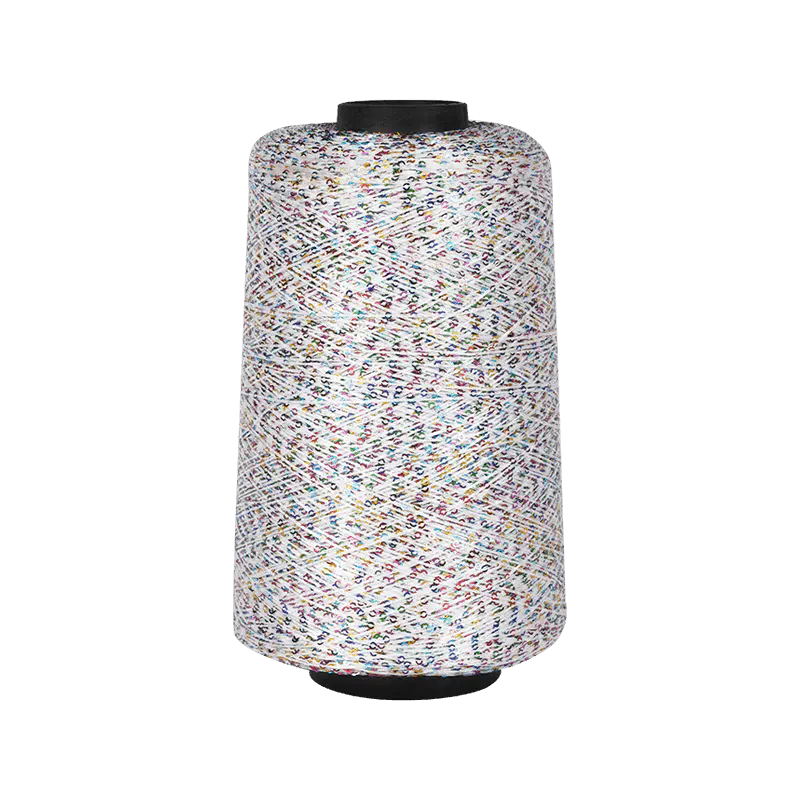
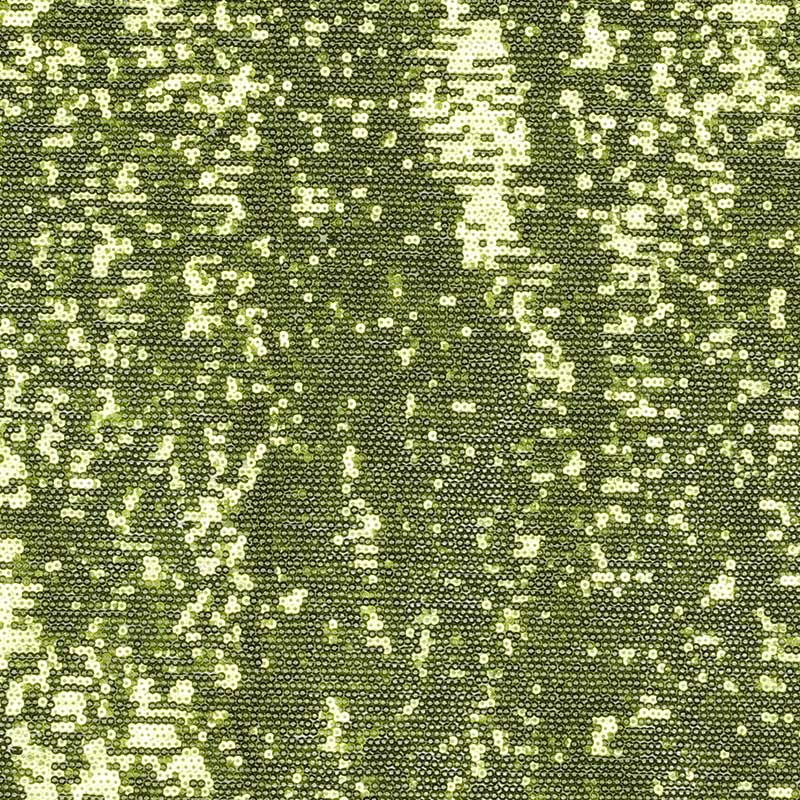 Sequin Embroidered FabricSequins sewn or embroidered onto a flexible base create a shiny, luxurious textile for evening gowns, stage costumes and wedding dresses. A stretch ground keeps motifs aligned and lets the fabric snap back between movements during performance.View Product →
Heat above roughly 150 C and chlorine residue are the two fastest destroyers of spandex recovery, and both are avoidable with correct finishing curves and simple care discipline.
Heat does not melt spandex the way nylon melts; it lets the spring segments slip, so recovery fades wash by wash rather than failing at once. Chlorine attacks the urethane links directly, which is why swimwear usually dies at the fiber level before the seams give way. Sunscreen oils and ultraviolet exposure accelerate both failures.
On the production side, the defenses are procedural: set dyeing and heat-setting curves safely inside the thermal limit, verify recovery after repeated launderings instead of only on day one, and match certification scope to the actual article - Oeko-Tex and GRS coverage should be quoted against the specific fabric, not assumed across a range.
Yes - one fiber, two regional names. Spandex is the generic term in the United States, elastane is the term in European and ISO standards, and various trademarks sit on top of both. The chemistry and performance are identical.
For a fitted knit, 4 to 8 percent is the working range. Below about 3 percent the effect is barely measurable; above 10 percent the fabric tends to feel rubbery, curl at the edges and age faster than the shirt around it.
High heat relaxes spandex more than it shrinks it. Fibers pushed past their thermal comfort zone stop recovering, so garments bag and stretch out instead of shrinking. Cool washing and flat or low-heat drying preserve recovery far longer.
With difficulty. Elastane contaminates most mechanical recycling streams, so commercial recycled content normally sits in the non-stretch portion of a blend. Buyers with sustainability targets should ask suppliers to state which fiber carries GRS or Oeko-Tex scope.
What Is Twill Fabric? Weave Structure, Types, Weights, and Real-World Uses
2026-09-16Nonwovens Explained: How Bonded Fabrics Differ From Woven and Knitted Textiles
2026-09-23Your email address will not be published. Required fields are marked *