English
 русский
 Español
News
Home / News / Industry News / PET Film for Textile: Key Properties, Metallic Yarn Applications, Buying Guide

PET Film for Textile: Key Properties, Metallic Yarn Applications, Buying Guide
Nov 25,2026
Metallic Yarn for Embroidery: Types, Machine Settings, and Bulk Buying Guide
Nov 18,2026
How to Calculate Thread Size: Measure Pitch, Diameter, and TPI for Any Bolt
Nov 11,2026
What Is Silk Made Of? Fibroin, Sericin, and the Fiber Processing Explained
Nov 04,2026
Properties of Linen Fibre: A Complete Guide to Strength, Moisture and Care
Oct 28,2026Ask a weaving mill sourcing manager to name the single component that separates a premium metallic yarn from a rejected batch, and the answer almost always comes back to the film strip wrapped around the core yarn. That strip is biaxially oriented polyethylene terephthalate, better known as PET film for textile use. Its gauge, clarity and coating decide whether a decorative fabric reflects light evenly or dulls, splits and cracks after the first laundering. This guide explains what PET film for textile applications actually is, why its dimensional stability and heat resistance determine yarn and fabric quality, and how to specify it so the film performs consistently from one production lot to the next.
PET film is a biaxially oriented polyester sheet produced by melt-extruding polyethylene terephthalate resin and stretching it in two directions. The two-stage orientation aligns the polymer chains, which is what gives the film its tensile strength and resistance to tear propagation.
Production starts with dried polyester chips, which are melted, cast onto a chilled drum, then stretched first in the machine direction and then in the transverse direction. A final heat-setting step locks in the molecular orientation. For textile processors, the practical result is a film that absorbs little moisture, holds its width under tension and survives the temperatures of dyeing, drying and heat transfer.
Four film grades cover most textile requirements:
Four properties decide whether a PET film grade belongs in your textile process: dimensional stability, heat resistance, chemical resistance and surface energy. These values are measurable, so they should appear on every material certificate you request.
Dimensional stability is the first parameter to check. A film with high free shrinkage curls after slitting and puckers after lamination, especially near the selvages. Heat resistance determines whether the film survives ironing, stentering and transfer printing. Chemical resistance matters in dye houses where acids and solvents are constantly in contact with rolls. Surface energy, measured in dynes per centimeter, controls how well vacuum-deposited aluminum and laminating adhesives bond to the film.
| Property | Typical value | Why it matters in textiles |
| Heat shrinkage at 150°C, 30 min | 0.5-2.0% | Prevents curled slit film and laminate edge lift |
| Tensile strength | 180-250 MPa | Withstands slitting, twisting and weaving tension |
| Water absorption | ~0.2% | Keeps dimensions stable in humid dye houses |
| Surface energy, treated | 40-44 dynes/cm | Ensures metallization and adhesive bond strength |
| Haze, clear grade | 2-6% | Defines gloss level of metallic yarn and laminated sheers |
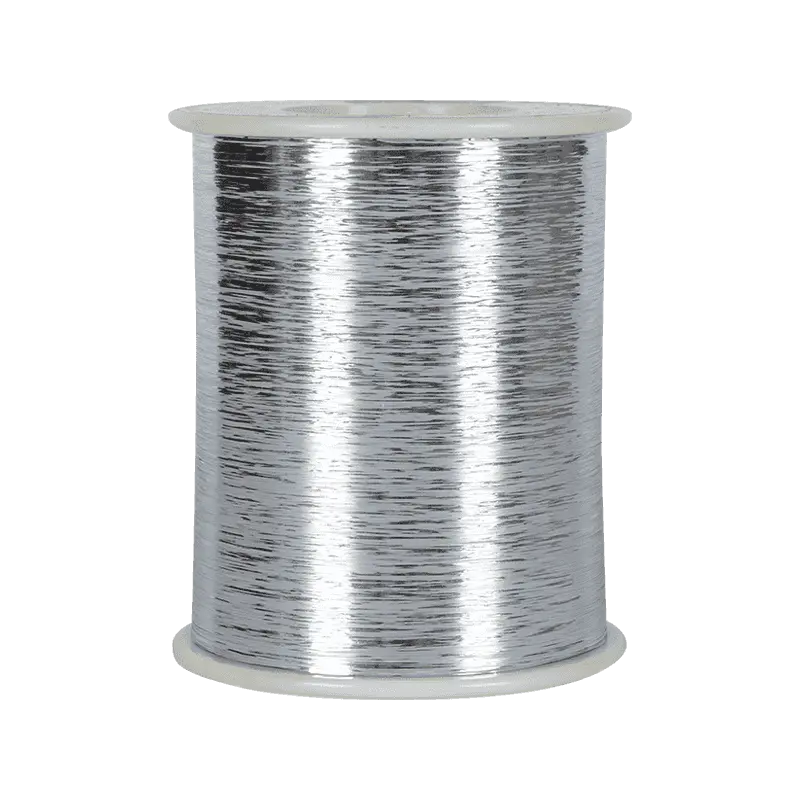
PET film is the substrate that carries the metal layer in nearly every metallic yarn produced today, and its quality sets the ceiling for the yarn gloss, rub fastness and tensile strength. The film is first metalized, then slit, then twisted or wrapped around a core yarn.
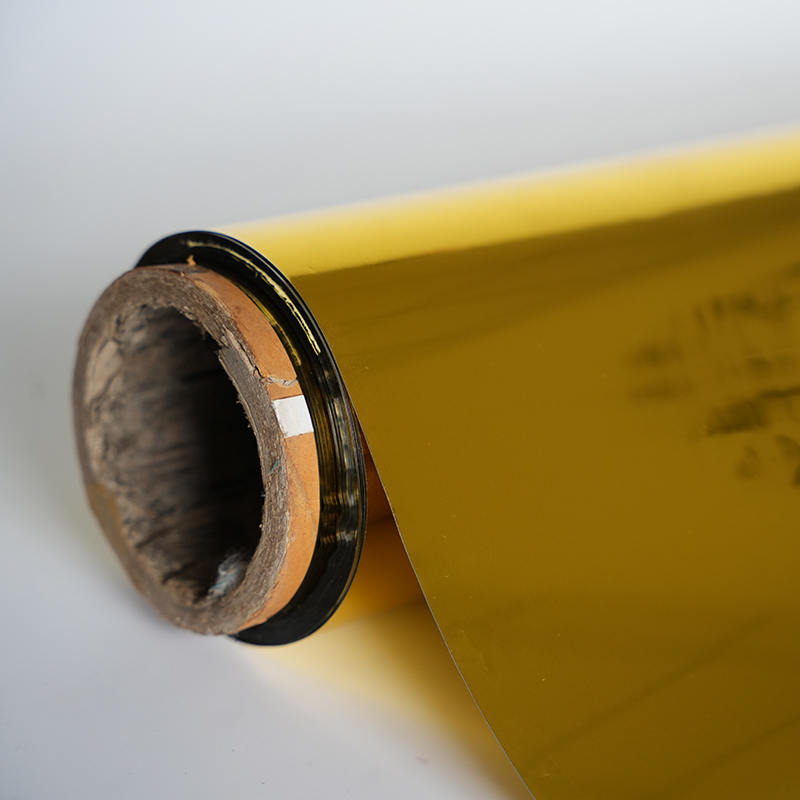 PET Film Substrate for Metallic Yarn ProductionThis film serves as the base material for metallic yarn, with controlled gauge and shrinkage specs chosen by engineers, making it critical for gloss and tensile quality.View Product →
At JinDun Textile Co., Ltd., PET film enters the plant as a controlled raw material with a written gauge and shrinkage specification. The company has run metallic yarn production since building its own metal yarn factory in 2010, so the film grade is selected by production engineers rather than by sales staff.
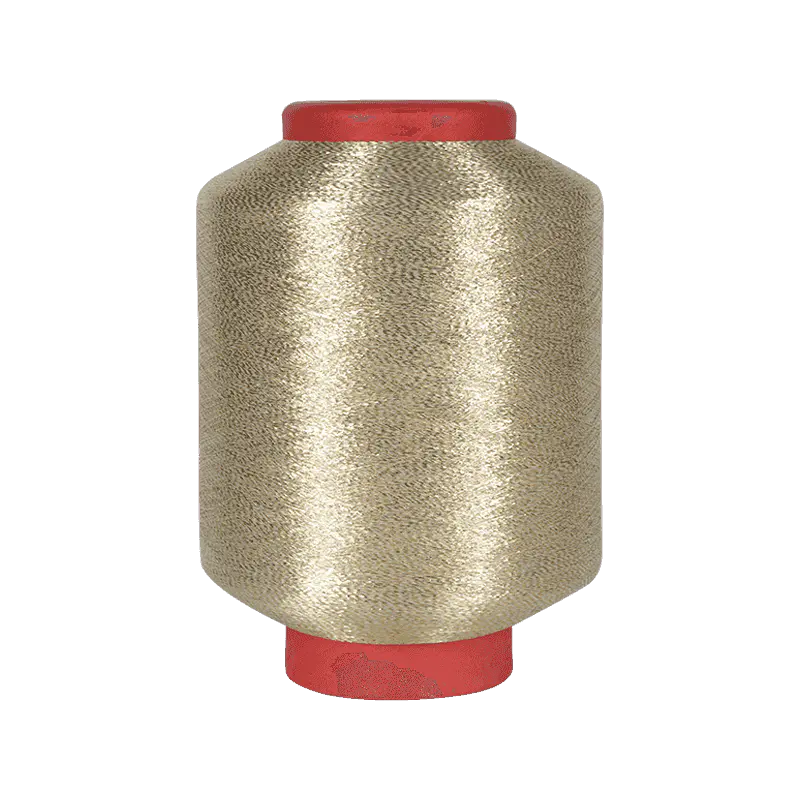
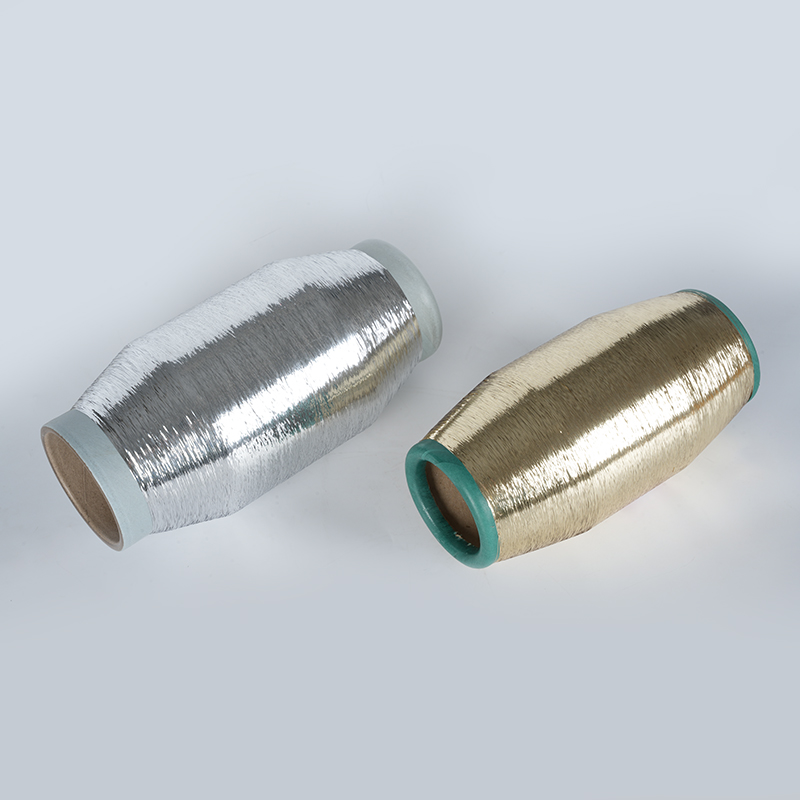 M Type Metallic Yarn with Slit Metallized PET FilmThis yarn uses twisted metalized PET film with polyester or nylon core, offering a superfine soft feel for high-grade fabrics, knitwear, and decorative crafts.View Product →
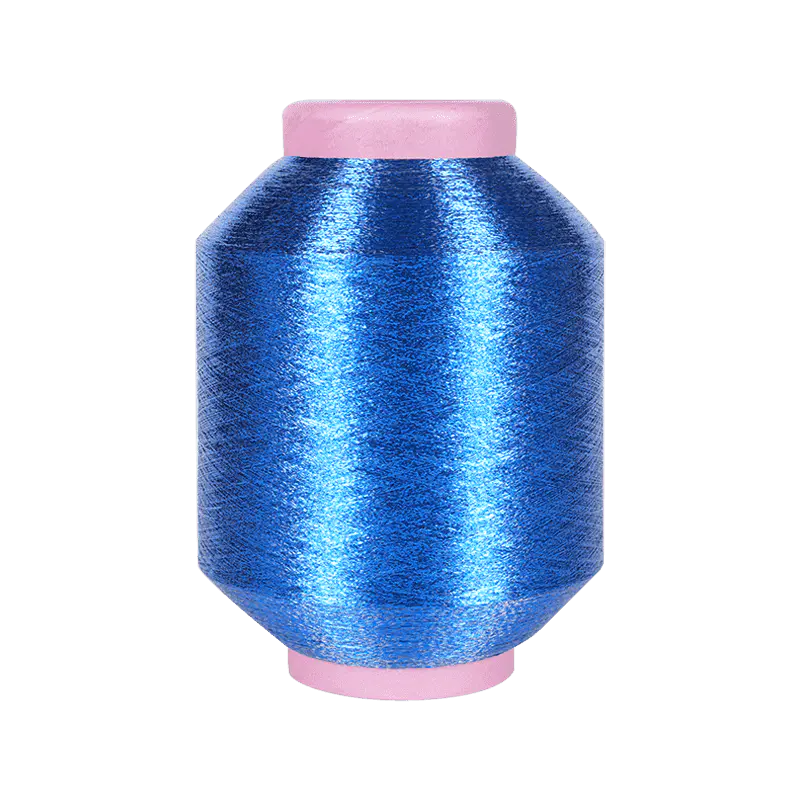
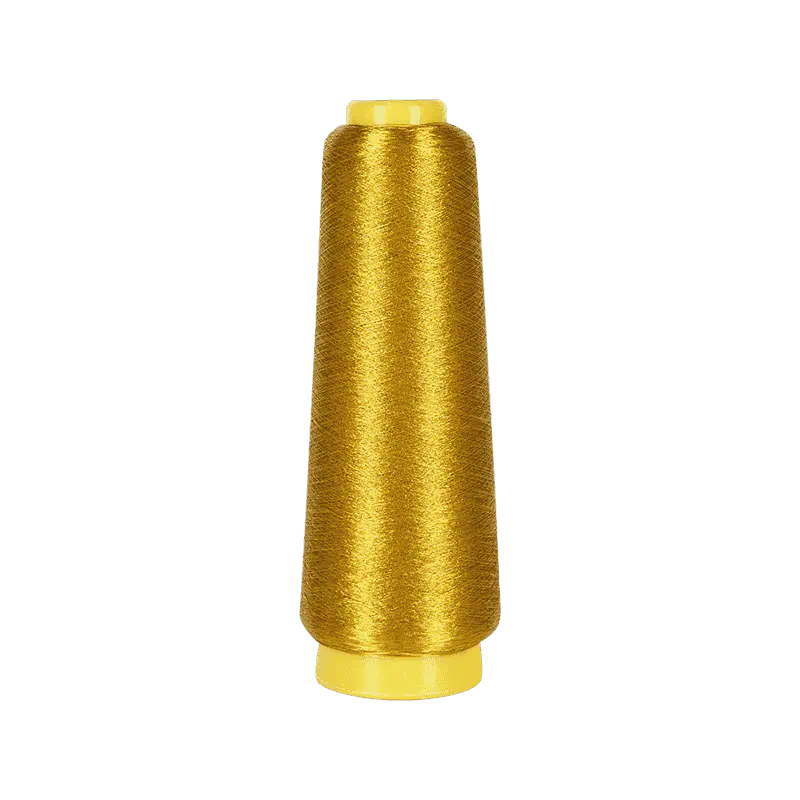
Metallic yarn is classified into M, MH, MS and MX series that differ by film strip width, core construction and twist structure. A standard single-strip yarn with a metalized PET ribbon offers the most direct balance of gloss, strength and cost, while specialty constructions vary the film band to create broken-color and iridescent effects.
Heat transfer PET film is the second major textile use: a biaxially oriented PET carrier holds the printed design, transfers it onto a garment under heat and pressure, then peels away. The carrier must stay dimensionally stable so the print does not stretch between the pressing board and the fabric.
Two peel types dominate production:
Hot Peel Film
Peeled immediately after pressing. Faster cycle and well suited to synthetic fabrics and simple sports prints, but fine details can distort at high temperature.
Cold Peel Film
Cooled before peeling. Gives sharper registration and is standard for multi-color designs and dark or structured fabrics. Slower cycle and more work in process.
Beyond transfer printing, PET film appears in lamination of mesh and tricot sheers, as a temporary embroidery backing, in decorative ribbon and trim, and as metalized packaging for the textile products themselves. The diverse applications of PET film explain why vertical textile mills usually keep at least two film grades in stock.
Typical PET film gauge by textile application
Gauge ranges are practical starting points; always confirm the exact spec with the film producer.
Specify PET film by gauge tolerance, optical grade, surface treatment and heat shrinkage, in that order, and verify each value on the certificate before the reel ships. These five checks avoid most downstream failures.
When sourcing, ask for Oeko-Tex and GRS documentation if the film will feed yarns destined for export garments. JinDun Textile Co., Ltd. supports its yarn and fabric lines with these certifications and publishes the film specification on its dedicated PET film page so buyers can match grades before sampling.
Short answers to the questions textile buyers ask most often when evaluating PET film for yarn and fabric programs.
PET film is used as the reflective substrate in metallic yarn, as a carrier in heat transfer printing, as a lamination interlayer for sheer and mesh fabrics, as temporary embroidery backing, and as metalized trim or packaging material. All of these uses depend on the film dimensional stability and heat resistance.
The practical range is 12 to 25 µm. Film below 12 µm tears during slitting, while film above 25 µm stiffens the yarn and reduces drape in woven or knitted fabrics. Micro-strips for fine counts generally sit at the thin end of the range.
Metalized PET film can enter polyester recycling routes when the metal layer is either separated or tolerated by the recovery process, which depends on the facility. If a buyer needs verified recycled content, the film and the yarn should carry GRS certification from the same supply chain; recycled polyester film exists but is not yet the standard for fine metallic yarn.
PET film has a higher melting point, better solvent resistance and no plasticizer migration, so it survives dyeing and ironing without yellowing or hardening. PVC film is easier to heat-seal but becomes brittle with age, which makes it a poor choice for apparel that is washed repeatedly.
Your email address will not be published. Required fields are marked *