English
 русский
 Español
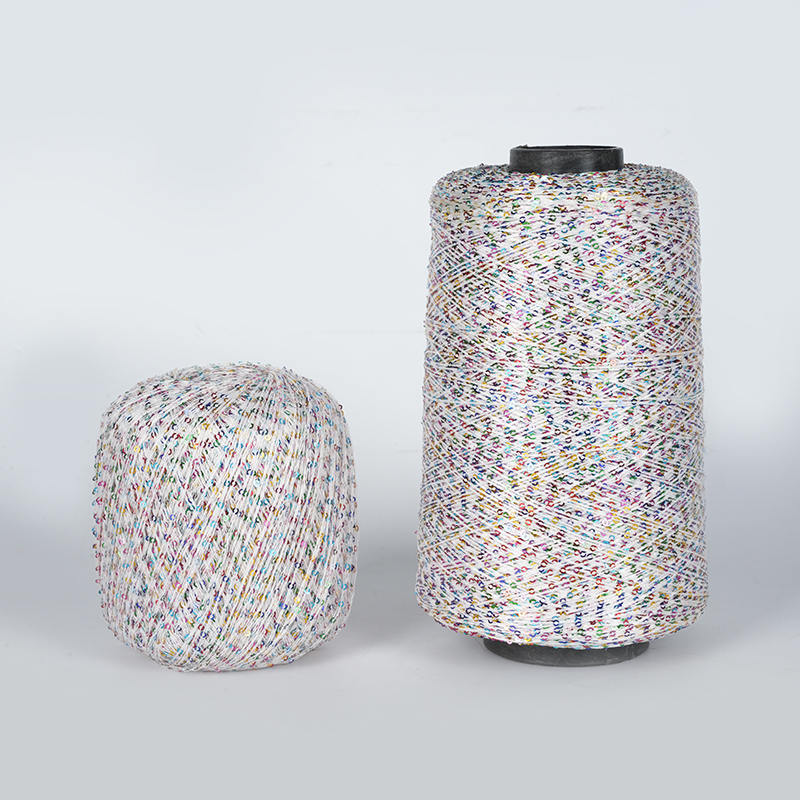
Conductive yarn is an ordinary-looking textile yarn with one extraordinary property: it conducts electricity. This apparently simple addition — making a textile material electrically conductive — opens up a range of applications that were technically impossible with conventional yarn: garments that monitor vital signs, heating elements woven into fabric, antistatic workwear that prevents charge buildup, textiles that transmit data signals, and interactive surfaces that respond to touch. As the electronics industry looks for ways to integrate functionality into the form factor of clothing and soft goods, conductive yarn is the fundamental enabling material that makes the textile-electronic interface possible.
Understanding the different types of conductive yarn, what their electrical properties actually are, how those properties are measured and specified, and what determines performance in specific applications is essential for anyone sourcing conductive yarn for functional textile development.
What Makes a Yarn Conductive
Standard textile yarns — polyester, nylon, cotton, wool — are electrical insulators. Their polymer or protein fiber structures have essentially infinite resistance: electrons cannot move through them in response to an applied voltage. Conductive yarn achieves electrical conductivity through one of three approaches: incorporating a conductive material within or around the fiber structure, coating the fiber surface with a conductive layer, or spinning conductive fibers alongside insulating fibers to create a yarn with distributed conductive pathways.
The conductivity of the resulting yarn depends on the conductivity of the conductive material used, the volume fraction of conductive material in the yarn cross-section, and the continuity of the conductive path along the yarn length. A yarn with highly conductive material (silver, copper) but low volume fraction (thin surface coating) may have acceptable resistance for some applications, but not for others. A yarn with moderately conductive material (carbon) in high volume fraction (blended throughout) may provide lower resistance per unit length than a silver-coated surface yarn despite silver's much higher intrinsic conductivity — the geometry of the conductive path matters as much as the material's bulk conductivity.
Types of Conductive Yarn by Conductive Material
Stainless Steel Fiber Yarn
Stainless steel fiber conductive yarn blends or wraps fine-diameter stainless steel filaments (typically 4–22 µm diameter, sometimes as fine as 1–3 µm) with standard textile fibers. The stainless steel fibers form a distributed conductive network through the yarn cross-section, providing both mechanical continuity and electrical connectivity. The resistance of stainless steel fiber yarn is higher than silver or copper-based constructions (stainless steel's electrical resistivity is approximately 7 × 10⁻⁷ Ω·m, versus 1.6 × 10⁻⁸ Ω·m for copper), but its physical properties — washability, abrasion resistance, compatibility with standard textile processing, and no corrosion under ambient conditions — make it one of the most practically used conductive yarn types in commercial applications.
Stainless steel fiber yarn is the standard specification for antistatic textiles in electronics manufacturing environments, chemical processing, and other industries where electrostatic discharge (ESD) is a safety or quality risk. The yarn's resistance is low enough to provide a discharge path for static charges without being low enough to create electrical safety hazards. It's also used in electromagnetic shielding fabrics, pressure-sensing textiles, and heating elements in textile form where resistance heating is required.
Silver-Coated Yarn
Silver-coated conductive yarn applies a continuous metallic silver coating to the surface of base fibers — typically nylon or polyester filament yarn — through electroless plating or physical vapor deposition. Silver's extremely high electrical conductivity (the highest of any metal at room temperature) produces yarn with very low resistance per unit length — typically 100–500 Ω/m for commercial silver-coated yarn, compared to 1,000–10,000 Ω/m or more for stainless steel blends. This low resistance per unit length makes silver-coated yarn the preferred choice for applications requiring efficient signal transmission, low-resistance electrical pathways in wearable electronics, and electromagnetic shielding where high shielding effectiveness requires low surface resistance.
The primary limitation of silver-coated yarn is durability: the silver coating, while well-adhered in modern plated constructions, can develop resistance increase with repeated flexion and laundering as the coating develops micro-cracks and oxidizes. The initial resistance of high-quality silver-coated yarn is excellent; the stability of that resistance through a garment's service life — including multiple wash cycles, ironing, and sustained mechanical flexion — is more variable and depends on the coating thickness, adhesion chemistry, and the mechanical demands of the end use. For applications where long-term resistance stability is critical (implantable electronics, medical monitoring garments), the wash and wear durability of the silver coating must be characterized rather than assumed from initial resistance measurements.
Copper-Based Conductive Yarn
Copper has slightly higher electrical conductivity than silver per unit volume and significantly lower cost. Copper-based conductive yarn is used where very low resistance is required, and cost is a constraint — signal bussing in wearable electronics, resistive heating elements in electric heated garments, and electrical connectors integrated into textile structures. Copper oxidizes readily in ambient air, which progressively increases surface resistance and creates reliability concerns in long-term applications; copper-based yarn is often tinned (tin-coated) or silver-plated to address this, which adds cost and partially offsets the material cost advantage over silver-coated alternatives.
Carbon-Based Conductive Yarn
Carbon fiber or carbon-loaded polymer fiber yarn provides moderate electrical conductivity — higher resistance than metal-based constructions but with specific advantages: excellent thermal stability, good chemical resistance, and lighter weight per unit length than metal-containing constructions. Carbon-based conductive yarn is used in heating applications where the resistive heating is evenly distributed through the textile, in high-temperature environments where metal-based constructions would oxidize, and in applications where the electromagnetic signature of the yarn matters (carbon reflects radar at different frequencies than metallic materials, which is relevant for certain defense applications).
How Resistance Is Measured and Specified
The electrical resistance of conductive yarn is typically specified as resistance per unit length — ohms per meter (Ω/m) or ohms per centimeter (Ω/cm). This length-normalized resistance allows direct comparison between yarns regardless of the length of yarn in the circuit, and allows calculation of the total resistance in a specific woven or knitted structure if the yarn path length is known.
Resistance measurement of conductive yarn must account for contact resistance at the measurement probes and for the yarn's cross-sectional geometry — two-point resistance measurements (probing at two points and measuring the voltage/current relationship) include the contact resistance at both probes, which can be significant relative to the yarn's bulk resistance for low-resistance metallic yarns. Four-point (Kelvin) resistance measurement eliminates contact resistance and gives a more accurate bulk resistance value. For quality control in production, two-point measurement on consistent probe setups is practical; for absolute resistance characterization, four-point measurement is the appropriate method.
| Yarn Type | Typical Resistance (Ω/m) | Wash Durability | Best Applications |
|---|---|---|---|
| Stainless steel fiber blend | 100–10,000+ (varies with blend ratio) | Excellent — fiber is inert | Antistatic, EMI shielding, pressure sensing, heating |
| Silver-coated (high quality) | 50–500 | Good to very good — depends on coating quality | Signal transmission, wearable electronics, low-resistance bussing |
| Copper-based / tinned copper | 10–200 | Moderate — oxidation risk without protective coating | Resistive heating, power bussing, and connectors |
| Carbon fiber / carbon-loaded | 1,000–100,000+ | Excellent — chemically stable | High-temperature heating, strain sensing, and chemical-resistant applications |
Key Applications for Conductive Yarn
Antistatic and ESD-Control Textiles
In electronics manufacturing cleanrooms, semiconductor fabrication, and explosive-environment workwear, static electricity is either a quality risk (ESD damage to components) or a safety risk (ignition of flammable atmospheres). Antistatic textiles incorporate conductive yarn — typically stainless steel fiber blend at a few percent by weight — to provide a continuous discharge path for static charges before they accumulate to dangerous levels. The conductive yarn must be distributed through the fabric at intervals close enough that static charges dissipate to the conductive network before reaching discharge potential, which is governed by the surface resistivity of the finished fabric rather than the yarn resistance alone. EN 1149 (European standard for electrostatic properties of protective clothing) defines the test methods and performance requirements for antistatic protective garments.
Wearable Electronics and Smart Garments
Conductive yarn is the interconnect medium in wearable sensor garments — shirts that monitor heart rate through ECG electrodes woven into chest bands, socks with pressure sensors in the sole, and gloves with capacitive touch detection in the fingertips. In these applications, the conductive yarn must carry signals from sensor elements (which may themselves be conductive yarn structures or rigid electronic components attached to the textile) to processing electronics, maintaining low and stable resistance through the mechanical and environmental stresses of garment use. Silver-coated yarn with resistance stability through hundreds of wash cycles and millions of flex cycles is the standard specification for reliable wearable electronic interconnects.
Textile Heating Elements
Resistance heating in textiles exploits the same physical principle as a conventional electric heater — current flowing through a resistive element generates heat according to P = I²R. Conductive yarn with appropriate resistance per unit length, woven or knitted into a textile in a geometry that distributes heat uniformly, creates a flexible textile heating element. Applications include heated gloves and garments for outdoor workers in cold environments, heated car seat covers, heated physiotherapy wraps, and electric blankets. The required yarn resistance is calculated from the power density needed (watts per unit area of heated fabric), the supply voltage, and the woven yarn path length in the heating circuit — getting this calculation right at the design stage prevents under- or over-powered heating elements in the finished product.
Electromagnetic Shielding
Conductive fabrics woven from low-resistance metallic yarn reflect and absorb electromagnetic radiation, providing shielding against radio frequency interference (RFI) and electromagnetic pulses (EMP). Medical facilities use shielded curtains and room liners to prevent EMI from affecting sensitive equipment; military and government applications require EMI shielding for sensitive communication and data processing equipment. Shielding effectiveness (SE) is the performance metric, measured in decibels, and is related to the surface resistance of the fabric — lower surface resistance (lower yarn resistance, higher conductive content) generally produces higher shielding effectiveness, though the relationship also depends on fabric construction geometry and the frequency range of interest.
What to Confirm When Ordering Conductive Yarn
The specification for a conductive yarn order for a specific application should include resistance per unit length (Ω/m) with acceptable tolerance, the conductive material type and construction (stainless steel blend, silver-coated polyester, etc.), the base yarn specification (fiber type, linear density in dtex or denier), and wash durability requirements if the end product will be laundered. For safety-critical applications, requesting test reports for the relevant standards (EN 1149 for antistatic, EN ISO 20471 integration for safety garments, etc.) from the supplier is appropriate. For wearable electronics development, specifying resistance stability after a defined number of wash cycles and flex cycles — and requesting test data demonstrating that stability — is more useful than initial resistance alone as a quality criterion.
Frequently Asked Questions
How much conductive yarn needs to be incorporated in a fabric to achieve antistatic performance?
This depends on the required surface resistivity of the finished fabric and the resistance of the conductive yarn. EN 1149-1 (the most commonly applied antistatic fabric standard for protective clothing) requires a surface resistance below 2.5 × 10⁹ Ω when tested at controlled temperature and humidity. Achieving this typically requires a conductive yarn spacing in the fabric of approximately 5–10mm, close enough that static charges generated on the fabric surface are within a short path to a conductive yarn element. The exact spacing depends on the yarn resistance: lower-resistance yarn can be spaced further apart and still achieve the required surface resistance, while higher-resistance yarn must be more densely incorporated. Fabric manufacturers typically use conductive yarn with spacing established through surface resistance testing rather than theoretical calculation, because practical fabric geometry — weave angle, yarn packing, fiber-to-fiber contact — affects the result in ways that are difficult to model precisely.
Is silver-coated yarn safe for use in garments worn directly against the skin?
Silver itself is biocompatible and is used in medical applications, including wound dressings and implants — there is no inherent safety concern with silver-coated yarn in skin contact applications. Silver's antimicrobial properties (silver ions disrupt bacterial cell membranes) make silver-coated yarn actively beneficial in some applications — odor-control sportswear and antibacterial socks use silver-coated yarn specifically for this property. The relevant safety consideration for skin-contact garments is REACH compliance (restriction on certain chemical substances in textiles sold in the EU) and OEKO-TEX certification, which verify the absence of harmful residual chemicals from the yarn manufacturing process. Reputable silver-coated yarn suppliers provide OEKO-TEX Standard 100 certification or equivalent to confirm safety for direct skin contact — requesting this documentation as part of specification sourcing is appropriate for any textile application with direct body contact.
Can conductive yarn be incorporated into standard knitting and weaving processes?
Most conductive yarn constructions are designed to be processed on standard textile machinery with appropriate adjustments. Stainless steel fiber blend yarns in round cross-section behave similarly to conventional synthetic yarn and can be processed on circular knitting machines, flatbed knitting machines, and rapier or air-jet looms with few or no modifications. Silver-coated yarn in filament form is similarly compatible with standard machinery. The challenges arise at the electrical connection stage — where the conductive yarn in the textile must be connected to electronic components or power supplies — because standard textile connectors and seaming processes are not designed for electrical connectivity. Developing reliable, washable electrical connections between the conductive yarn in a textile and an electronic interface is typically the most challenging design problem in wearable electronics development, requiring purpose-designed connection hardware or conductive adhesive systems rather than conventional sewing or ultrasonic bonding.
Conductive Yarn | Reflective Yarn | Double-Sided Reflective Yarn | Luminous Yarn | Functional Yarn | Contact Us