English
 русский
 Español
News
Home / News / Industry News / What Is Twill Fabric? Weave Structure, Types, Weights, and Real-World Uses
Spandex Material Explained: Stretch Properties, Blend Ratios and Mill Practice
Sep 09,2026
What Is Twill Fabric? Weave Structure, Types, Weights, and Real-World Uses
Sep 16,2026
What Is Microfiber Made Of? Polyester, Polyamide Ratios and Fiber Facts
Sep 02,2026
Sequin Yarn for Knitting: Sparkle Effects & Fashion Textiles
Aug 26,2026
Fancy Yarn for Knitting: Decorative Textiles & Premium Effects
Aug 19,2026Run a thumb across the seat of a well-worn pair of chinos and you will feel fine parallel ridges running at a diagonal across the cloth. Find the same ridges on raw denim, a school blazer, or a workshop apron, and you have just identified one of the oldest structures in weaving. That diagonal texture is the twill weave, and cloth built on it is what mills mean when they sell twill fabric. The structure is simple to describe, surprisingly varied in practice, and responsible for most of the hard-wearing, drape-friendly cloth in any wardrobe. This guide explains how the weave works, which twill families matter, what the cloth should weigh for each job, and how to specify it without surprises.
Twill fabric is defined by its weave structure rather than its fiber content, which is why cotton, wool, silk, polyester, and rayon cloth can all be twills. Ask a weaver what makes the cloth and the answer is geometry: an interlacing pattern that shifts one thread on every pass builds the diagonals.
Twill fabric is cloth in which each weft thread passes over one or more warp threads, then under two or more, with the interlacing shifted one thread on every successive row, producing parallel diagonal ribs called wales.
Because geometry sets the rules, a spinning and weaving operation can build a twill from almost any yarn program. Cotton twills dominate workwear and denim, wool twills anchor suiting, and rayon or polyester twills carry prints into dresses and linings. For a representative example of spun yarn converted into finished woven cloth for garment buyers, see the product below:
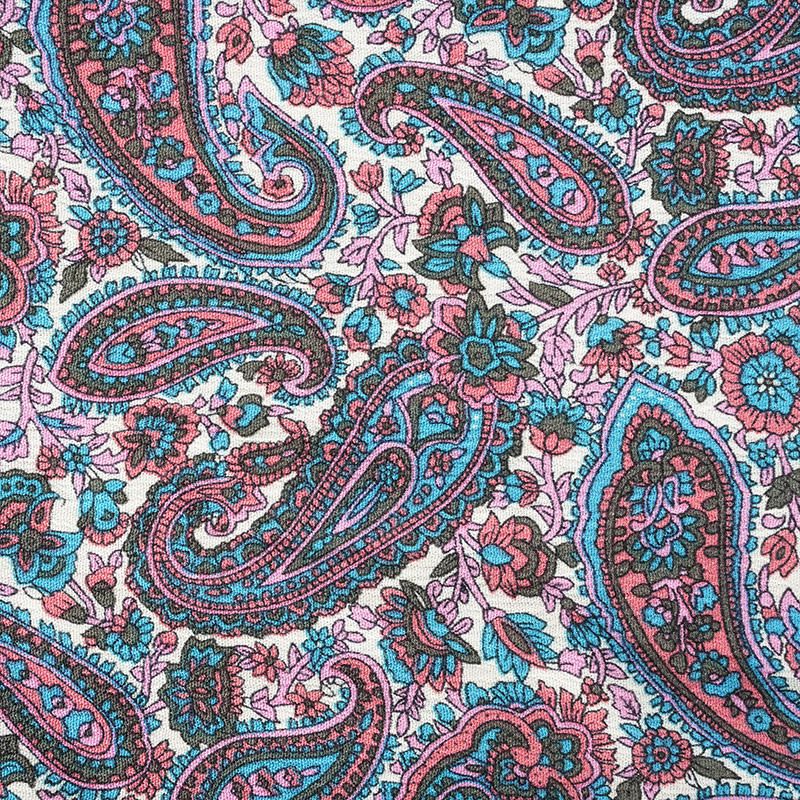 Rayon Printed Woven Fabric for GarmentsA woven rayon fabric with a flat, stable surface and fine printing, available at 110-120 gsm with customizable patterns. A representative example of spun yarn converted into finished cloth for dress and lining programs.",View Product →
The diagonal comes from one trick: the interlacing pattern shifts by a single warp thread on each weft pass, so the points of contact line up into slanting columns called wales.
Warp yarns run lengthwise under tension. In warp-faced twills such as 3/1 denim, most of the yarn visible on the face of the cloth is warp.
Instead of the strict over-one, under-one rhythm of plain weave, the weft passes over one or more warps, then under two or more. Each float covers several warp threads at once.
This offset is the entire trick. Staggering the interlacing points by one thread on every row turns isolated contacts into continuous diagonals.
The result is a ribbed surface whose angle steepens as floats lengthen. A balanced 2/2 twill sits near 45 degrees, while long-float warp twills climb visibly steeper.
Fewer interlacing points per square centimeter than plain weave is the whole story: that one structural fact explains why twill wears longer, drapes softer, and hides soil better at the same weight.
Compared with plain weave, twill trades a little crispness and air flow for durability, drape, and soil hiding, a trade that suits garments which take daily abuse.
The two weaves sit at opposite ends of the interlacing scale, and the difference shows up in the hand and in service life. If your comparison also includes knit bases, it pays to be clear first on how woven and knitted structures differ, then weigh weaves inside the woven family.
Plain weave
Twill weave
Six named constructions cover most purchase orders for twill cloth, and each earns its keep in a specific product category.
| Twill family | Interlacing pattern | Signature look | Typical products |
| Even twill 2/2 | Weft over two, under two, shifting one thread each pass | Balanced diagonal, similar on both faces | Suits, trousers, tote bags |
| Warp-faced 3/1 | Warp floats over three of every four weft picks | Smooth face, paler back; denim is the classic | Jeans, work cloth, sheeting |
| Serge 2/1 or 2/2 | Hard-twisted yarns in a tight, even diagonal | Firm, smooth, subtly lustrous hand | Uniforms, tailored jackets |
| Herringbone | Diagonal reverses direction in narrow bands | Broken chevron ribs with strong visual rhythm | Jackets, blankets, upholstery |
| Houndstooth 2/2 | Four-light, four-dark yarn sequence in a 2/2 twill | Jagged two-tone check | Coats, skirts, scarves |
| Cotton drill 3/1 | Sturdy warp-faced cotton twill, tightly woven | Slightly ridged, hard-wearing face | Workwear, khaki uniforms |
Upholstery programs lean on dense even twills for exactly the reasons in the table: abrasion resistance with enough flex for cushions and covers. Our sofa fabric follows that brief for furniture makers:
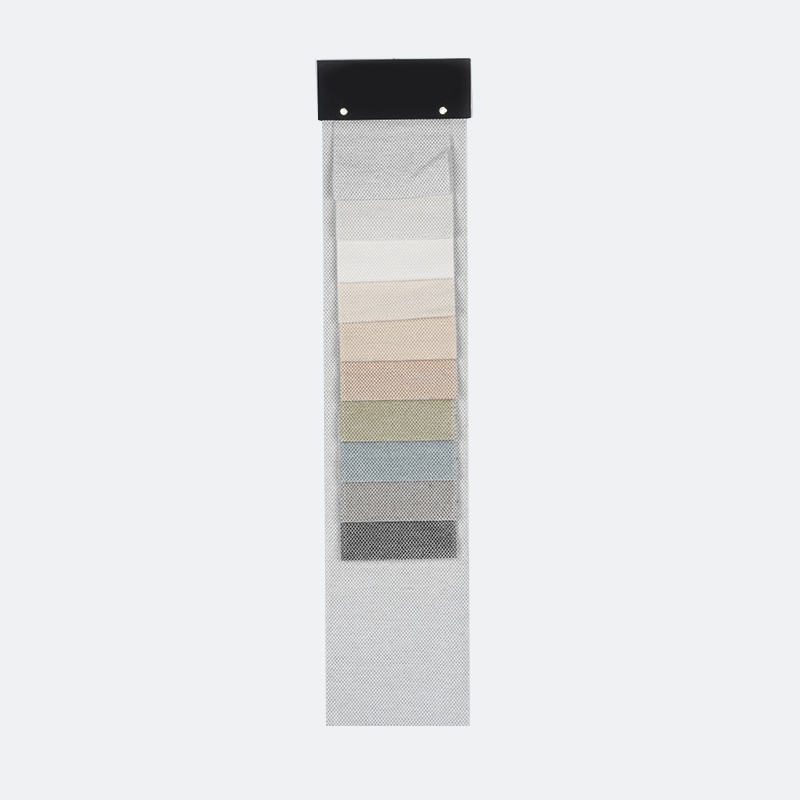 Polyester Sofa Upholstery FabricPolyester upholstery fabric that mimics textures like linen and cotton at low cost, offering the abrasion resistance and flex furniture makers need for cushions and covers.",View Product →
Weight, measured in grams per square meter (GSM), is the fastest predictor of how a twill will behave, and most commercial programs land between 140 and 420 GSM.
Typical twill weight by end use
Approximate mid-range values in grams per square meter (GSM)
Mills often quote denim in ounces per square yard; 10 oz converts to roughly 340 GSM. Actual weight varies with fiber, yarn count, and weaving density.
Match weight to abuse rather than to season. A 140 GSM twill makes crisp shirting, around 250 GSM handles trousers, 300 to 340 GSM is workwear territory, and anything above 400 GSM belongs on furniture. For flame-resistant programs, a 300 GSM cotton twill base is the industry workhorse, which is the logic behind our cotton fireproof fabric:
 Cotton Fireproof Fabric for WorkwearSpecially treated cotton with enhanced flame-retardant properties, used in firefighting uniforms and welding attire. Around 300 GSM, it is the industry workhorse for flame-resistant twill programs.View Product →
Most disputes between twill buyers and mills trace back to four assumptions left unwritten: weight, float pattern, shrinkage, and seam behavior. Put them in writing and the risk drops sharply.
Approve a physical swatch, never a photo. GSM, twill line direction, float pattern, and finishing each change how an identical construction behaves in the hand.
Our team at JinDun Textile Co., Ltd. has run yarn and fabric programs for 18 years, from metallic and fancy yarns through finished garment and home textile cloth, and these checks mirror what we confirm with buyers before bulk weaving. More detail on our manufacturing background is on the about page.
No. Denim is one member of the twill family: a 3/1 warp-faced cotton twill, traditionally woven with indigo warp and white weft. Twill names the weave; denim names the product built on it.
Less visibly than plain weave of the same weight. The ribbed surface and resilient floats spring back better, although all-cotton twills still crease and normally receive a wrinkle-resist finish or a garment wash.
Neither by default. The weave sets structure and durability, while fiber sets the season: linen and rayon twills breathe in summer heat, while wool and heavy cotton twills insulate in winter.
Hold the cloth up to a light source and look for parallel diagonal ribs, then rub the surface between your fingers to feel the ridges. On warp-faced twills such as denim, the back looks noticeably paler and smoother than the face.
What Is Microfiber Made Of? Polyester, Polyamide Ratios and Fiber Facts
2026-09-02Spandex Material Explained: Stretch Properties, Blend Ratios and Mill Practice
2026-09-09Your email address will not be published. Required fields are marked *