English
 русский
 Español
The Definitive Role of PET Film in Modern Industry
PET film stands as one of the most critical materials in the global packaging and industrial sectors due to its exceptional strength, thermal stability, and optical clarity. Unlike standard polyethylene films, Polyethylene Terephthalate (PET) offers a unique combination of rigidity and durability that makes it indispensable for applications requiring high performance. It serves as a barrier against moisture and gas, protects sensitive electronic components, and provides a reliable substrate for high-quality printing. Its versatility allows it to be used in everything from food packaging to the insulation of flexible circuits in smartphones. This material is not merely a plastic sheet; it is a sophisticated engineering solution that addresses complex challenges across multiple industries.
Understanding the Material Composition
PET film is a thermoplastic polymer belonging to the polyester family. It is created through the polymerization of ethylene glycol and terephthalic acid. The result is a film that exhibits excellent dimensional stability, meaning it maintains its shape and size even when subjected to varying temperatures and stresses. The molecular structure of PET is characterized by strong intermolecular forces, which contribute to its high tensile strength and chemical resistance.
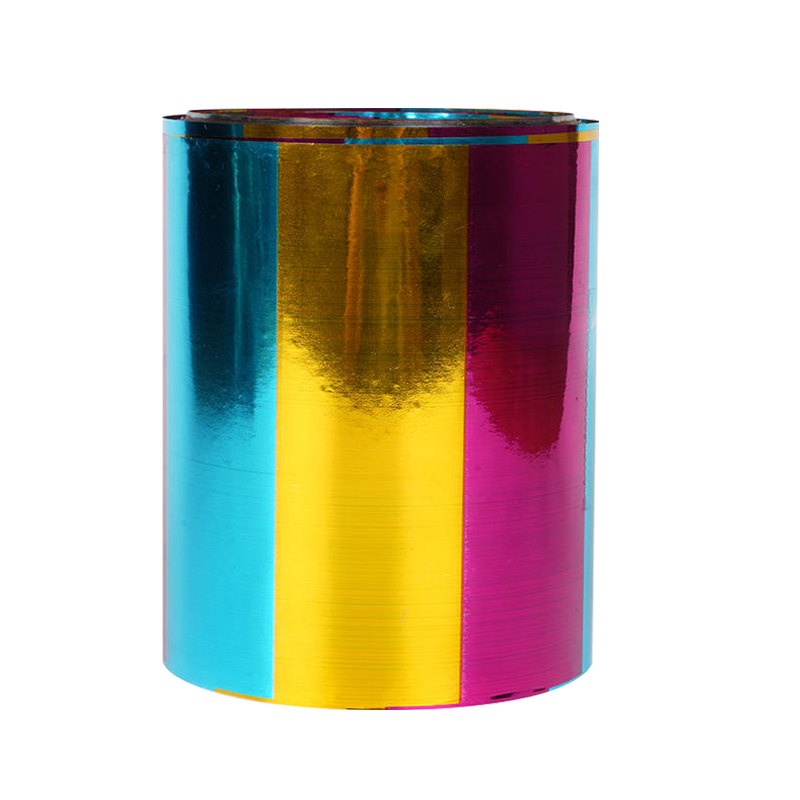
The material is inherently clear and colorless, allowing for high light transmission, but it can easily be modified with additives to create opaque, white, or metallized versions. This adaptability is a primary reason for its widespread adoption.
The Manufacturing Process: From Resin to Film
The production of PET film is a precise engineering feat that involves extrusion and orientation. The process begins with melting PET resin chips, which are then extruded through a slit die onto a chilled roller to quench the material into an amorphous sheet. However, the defining characteristic of high-quality PET film is achieved through a process known as biaxial orientation.
Biaxial Orientation Technology
In this stage, the amorphous sheet is stretched in two directions: machine direction (MD) and transverse direction (TD). This stretching aligns the polymer chains, significantly enhancing the film's mechanical properties.
- Machine Direction Stretching: The film is stretched longitudinally at a temperature above the glass transition point, increasing its length and improving tensile strength.
- Transverse Direction Stretching: The film is then stretched width-wise inside a tenter frame, which stabilizes the structure and enhances barrier properties.
This dual-axis stretching ensures that the film performs consistently under stress and prevents shrinking or warping during later application processes. The final step involves heat-setting the film to lock in these molecular changes, resulting in a stable product that can withstand significant thermal punishment.
Key Physical and Chemical Properties
The superiority of PET film over alternatives like PVC or polyethylene lies in its robust property profile. These characteristics make it a preferred choice for engineers and designers.
| Property | PET Film | Polyethylene (PE) | Polypropylene (PP) |
| Tensile Strength | Very High | Low to Medium | Medium |
| Thermal Resistance | High (Up to 150°C) | Low | Medium |
| Barrier to Moisture | Excellent | Good | Good |
| Optical Clarity | High | Moderate | High |
Exceptional Thermal Stability
One of the most sought-after qualities of this material is its ability to withstand high temperatures without deforming. It retains its mechanical properties across a wide temperature range, typically from -70°C to 150°C. This makes it suitable for hot-fill packaging processes and electronics that generate heat. Unlike PVC, which can soften and distort at relatively low temperatures, PET remains rigid and functional.
Mechanical Strength and Durability
High tensile strength allows the film to be produced in very thin gauges while still maintaining resistance to punctures and tears. This durability reduces material usage without compromising the integrity of the package or component. For instance, a thin layer of 12 microns can provide better protection than a significantly thicker layer of lower-grade plastic.
Diverse Applications Across Industries
The application spectrum for PET film is vast, driven by its adaptability. It functions as a protective layer, an insulating medium, and a decorative surface.
Flexible Packaging Solutions
In the packaging sector, it acts as a barrier against oxygen and moisture, which are the primary causes of food spoilage. It is widely used for snack food packaging, coffee pouches, and cheese wraps. The material's surface is ideal for high-resolution printing, allowing brands to display vibrant graphics directly on the film. Metallized versions of the film are used to extend the shelf life of sensitive products by reflecting light and providing an ultra-high barrier to gases.
Electronics and Electrical Insulation
The electrical industry relies heavily on this material for wire and cable insulation, motor slot liners, and flexible printed circuit boards. Its dielectric strength ensures safety and efficiency in electronic devices. In the production of touchscreens and flexible displays, specialized PET films serve as the outermost protective layer due to their scratch resistance and optical clarity.
Imaging and Graphics
For the printing industry, the film serves as a base for photographic paper, overhead transparencies, and digital printing media. Its dimensional stability ensures that printed images do not distort, maintaining precise registration during multi-color printing processes.
Specialty Variants and Surface Modifications
Not all PET films are created equal. Various surface treatments and modifications expand their functionality.
- Metalized Film: A thin layer of aluminum is vacuum-deposited onto the surface to create a mirror-like finish that blocks light and gases, essential for preserving flavors in coffee and snacks.
- Heat-Sealable Film: One side is coated with a lower-melting-point polymer, allowing it to seal to itself without glue, a critical feature for vertical form-fill-seal machines.
- Anti-Static Film: Incorporating conductive additives prevents static charge buildup, which is vital for packaging sensitive electronic components like circuit boards.
- Release Film: A silicone coating is applied to create a non-stick surface, used in the manufacturing of adhesive tapes and composite materials.
Sustainability and Environmental Impact
In the current industrial landscape, the environmental profile of materials is scrutinized. PET film offers distinct advantages regarding sustainability. It is fully recyclable and falls under the "Number 1" plastic category in recycling codes. The infrastructure for recycling PET is well-established globally, allowing post-consumer waste to be converted into fibers for clothing, carpeting, or new packaging materials.
Furthermore, the trend towards "light-weighting" packaging supports its use. Because the film is so strong, manufacturers can use less material to achieve the same performance, thereby reducing the carbon footprint associated with transportation and disposal. While it is derived from petroleum-based resources, the ability to recycle it repeatedly without significant degradation of quality makes it a more circular option compared to mixed-material laminates that are difficult to separate.
Selection Criteria for Industrial Use
Choosing the correct specification requires a clear understanding of the end-use environment. Engineers must consider several variables to ensure optimal performance.
- Thickness Requirements: Film thickness typically ranges from thin gauges of roughly 4 microns for capacitor applications to over 350 microns for heavy-duty insulation. Selecting the wrong thickness can lead to mechanical failure or unnecessary cost.
- Surface Energy: Untreated PET has a low surface energy, which can make printing difficult. Corona treatment is often applied to raise the surface energy, ensuring inks and adhesives bond effectively.
- Barrier Needs: Determine if the application requires a simple moisture barrier or a high-performance oxygen barrier. Standard clear film offers moderate protection, while metallized or coated variants provide superior barrier performance.
Future Trends in Polyester Film Technology
Innovation continues to drive the evolution of this material. Bio-based PET, derived partially from plant materials like sugar cane, is gaining traction as a way to reduce reliance on fossil fuels. Additionally, researchers are developing multi-layer co-extruded films that combine different functional layers in a single manufacturing step, reducing the need for lamination and simplifying the recycling process.
The demand for thinner, stronger films will continue to rise as industries seek to reduce waste and improve efficiency. Whether for protecting high-tech electronics or preserving fresh food, PET film remains a cornerstone material that bridges the gap between durability and functionality.